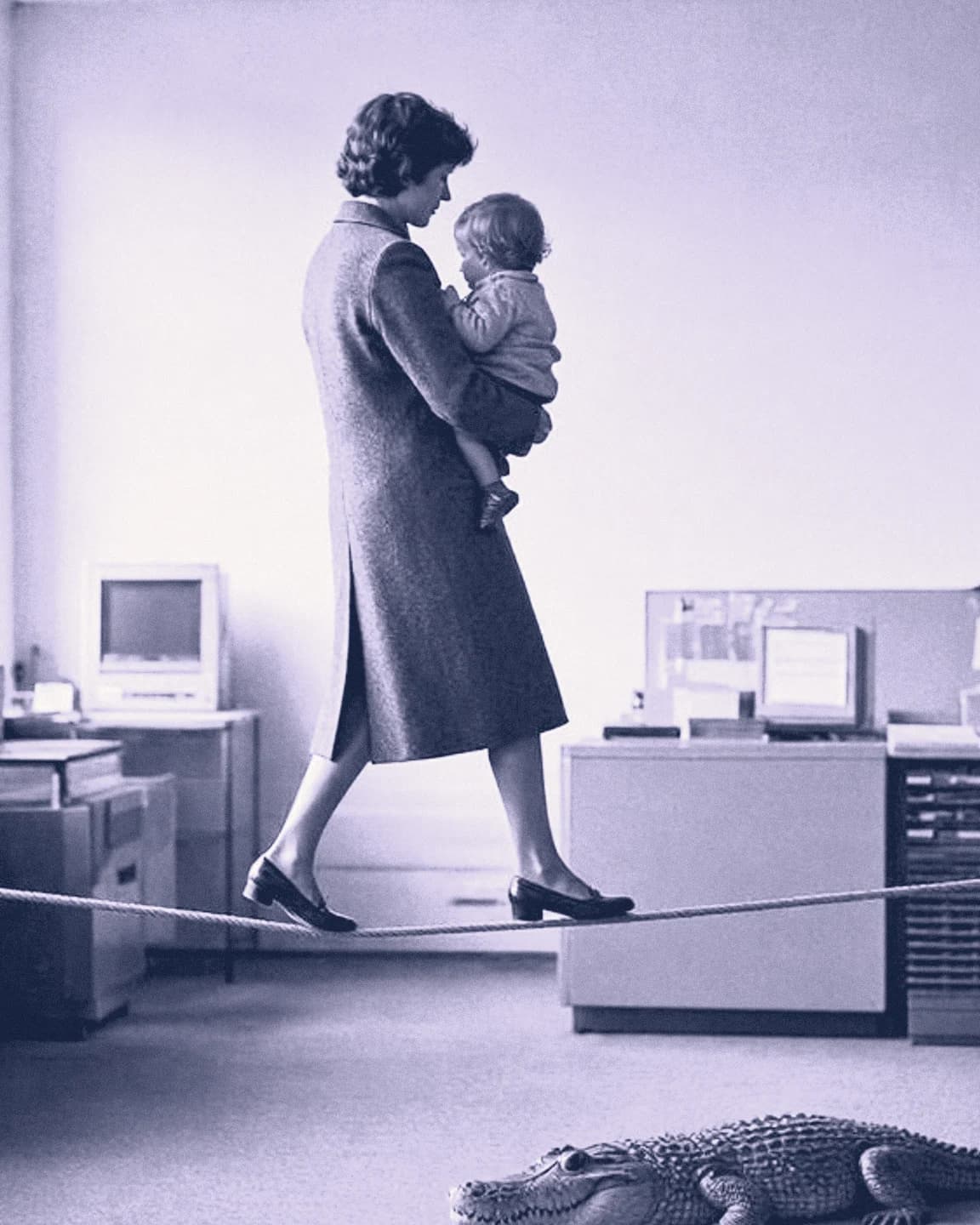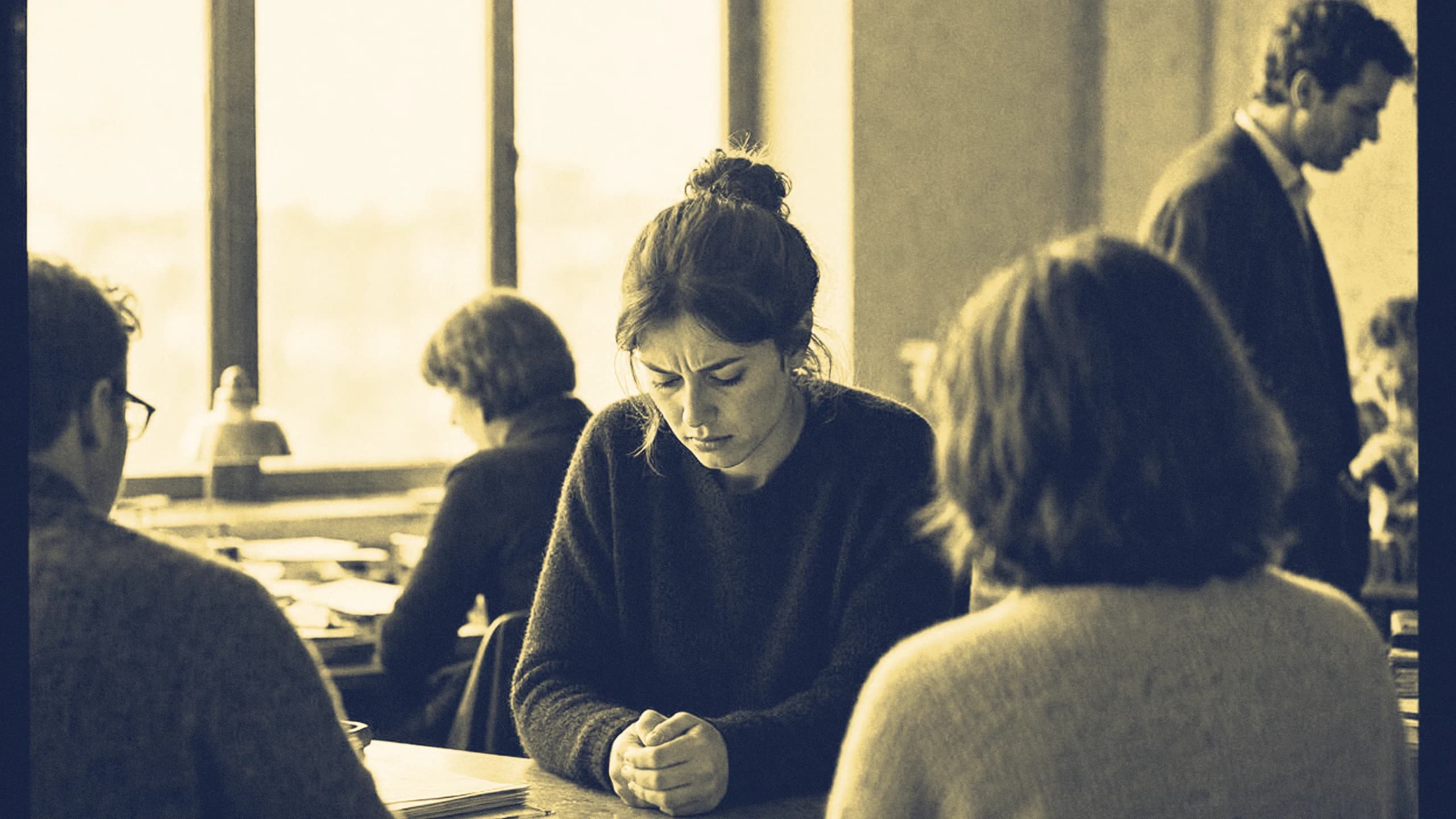
We unerringly pick up the patterns of behaviour, the fears and the limitations that our parents pass on to us, often without a word. This state of unconscious dependence on the life path of people who matter to us runs like a red thread through the stories of many clients. And because it usually lies outside their awareness, it blocks their ability to respond sensibly and maturely to a triggering situation.
How can you become more successful?
The case of Maria K., 35, Moscow
Here is an example from my work with a client whose career keeps repeating the same situation: despite every apparent advantage, at several workplaces she has been unable to rise above deputy head of a unit (formally or informally). Each time there are reasons why she cannot take the vacant head position, and she stays on as deputy to a newly arrived boss.
Starting from the question “What am I doing wrong, and what other skills do I need to develop?”, we came to understand that the client is under the unconscious influence of her father’s career. For a long time her father played second fiddle and everything went smoothly; once he took a leading position, he quite quickly failed, and the whole family, including my client, went through it emotionally. Her “unconscious” is anxious and turns on a red light whenever there is a chance to become “number one” — so as not to repeat the traumatic experience she has already lived through.
Besides helping clients see this connection and their unconscious dependence, what else can a coaching psychologist do in such a situation? This is where the main work begins: separating the client, their results and their career from the results and life experience of the significant parent.
Maria K.’s story is shared with her permission.
Her name has been changed.
The most important message here is that parents follow their own path and children follow theirs, without repeating their parents’ path. A child needs to step out of their parents’ shadow and shed the limitations of earlier generations’ experience, while keeping their strength and discovering their own self and wholeness.
This is a necessary part of psychological growing up, which by no means always comes with intellectual and physical development. You can be a strong, athletic intellectual in your thirties and still hang on the “umbilical cord” of dependence on a significant parent’s views, wishes and experience.
I clearly see that the stronger the parent’s personality, the harder the separation. A child (or teenager) needs a great deal of inner strength, perhaps a wisdom beyond their years, and most often help from outside, for separation to begin at all and then to succeed. Even so, triggering situations can arise that make a person who is far from a child regress into a childlike state, losing some of what they had achieved or some signs of separation. As a rule, this happens most often when pressure increases and parents try to regain power over their child in one way or another — sometimes even through illness.
Here it is important to see the line between separation as a psychological separation from one’s parents and a complete break, up to cutting off contact. The latter cannot be supported either from a human or from a psychological point of view, because it is more likely to weaken the person and sever their connection with their family as the roots that feed the tree.
After all, the more deeply we know and understand our family and our ancestors, the more knowledge and wisdom of earlier generations we carry — and the more we are able to choose our own path consciously.
We become whole and strong when, on the one hand, we can take and make our own everything important and strong in our family — everything we can be grateful to our parents for — and, on the other, calmly acknowledge what may once have seemed to us their weaknesses or shortcomings. The key word is their. Not ours. Because each of us has our own path.