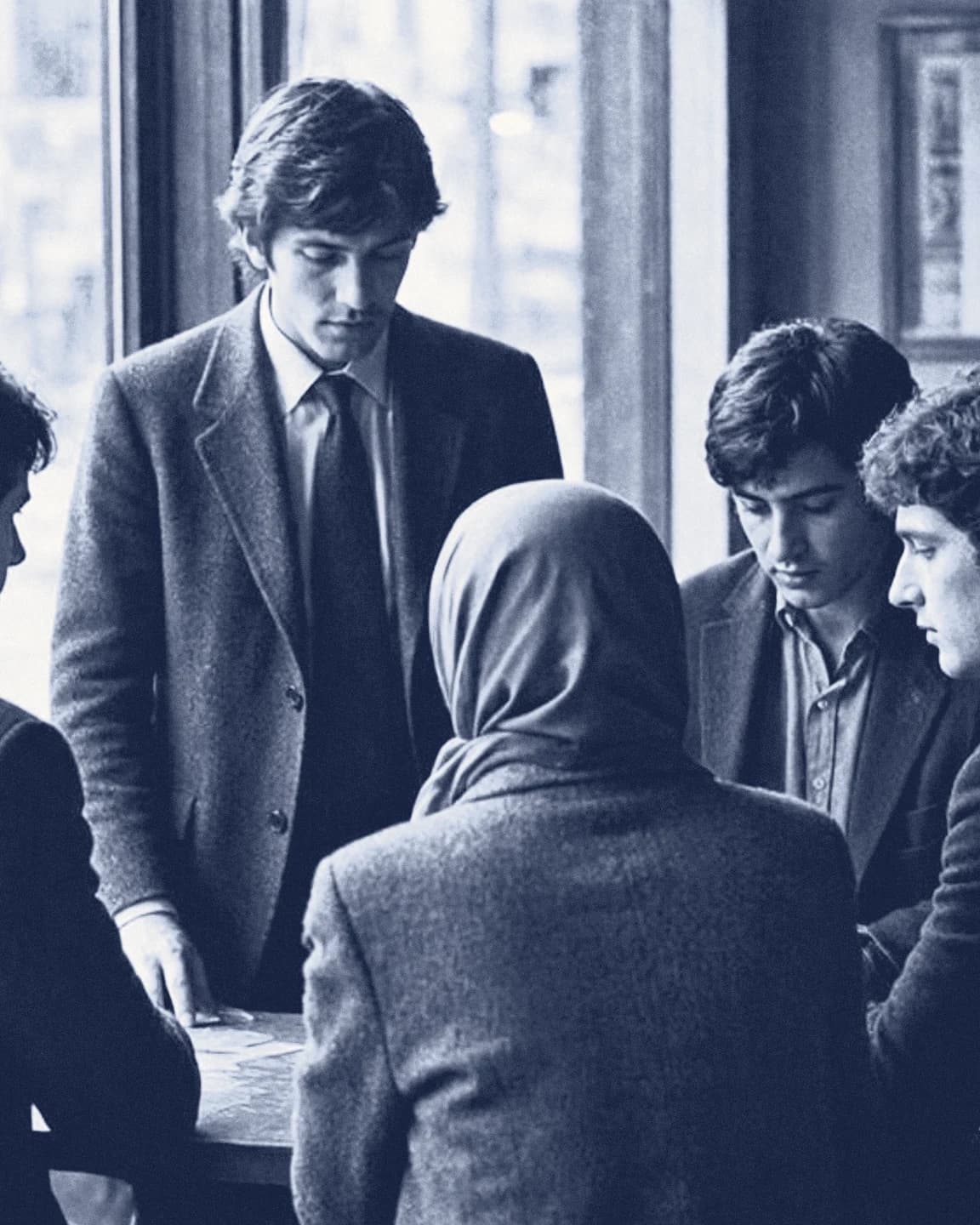


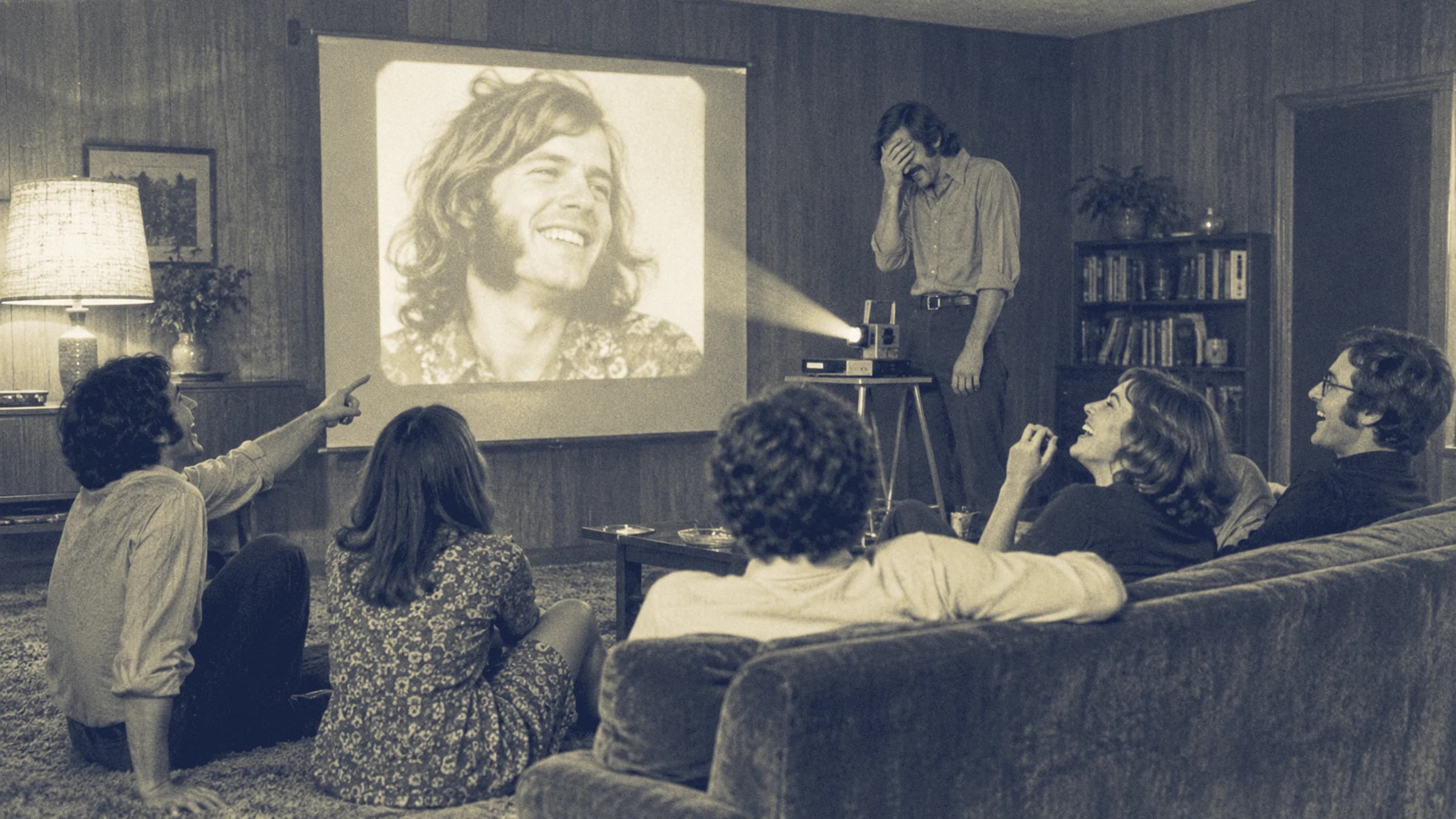
The “your photo ten years ago” trend sweeps social media every so often. This year it was 2016’s turn: dog-ear filters, Pokémon Go, the first Stories, fringes better left forgotten.
Psychologists could have predicted that laugh. In 2013 Daniel Gilbert and his colleagues surveyed more than 19,000 people aged 18 to 68 [1]. Some were asked how much they had changed over the past ten years, others how much they would change over the next ten. People rated past change as large and future change as modest. And at every age: 20-year-olds, 40-year-olds and 60-year-olds alike believed the main changes were behind them and that from now on they would stay as they are.
This is called the end of history illusion. It is as if we stand at the finish line looking back: look how far I’ve come. But there is no finish line. Ten years from now you will look at today’s photo with the same “who is that?”.
The interesting part begins when you try to work out how much you have really changed. The only witness is your own memory, and memory, it turns out, is an unreliable witness.
An unreliable witness
To see how much you have changed, you need to compare yourself today with yourself ten years ago. Today’s you is right here. The earlier one exists only in memory. And memory is not an archive of original documents — it is more like an editor who rewrites the text a little every time it is opened.
Worse still, this editor works in two opposite directions at once.
First, it inflates the difference. Psychologists Anne Wilson and Michael Ross asked people to rate their present and past selves [2]. Participants consistently rated their past selves lower: less clever, more naive, less confident. The further back, the harsher the verdict. Most telling of all, people often “remembered” themselves as worse than they had rated themselves at the time. There had been no real leap, but memory drew one in. The authors called their paper “From chump to champ”. The mechanism is simple: if yesterday’s me was a loser, today’s me looks like a winner, even without having done anything.
Second, it erases the difference. With views and beliefs it works the other way round. In a classic experiment, school students were talked out of their position on a heated social issue and then asked to recall what they had thought before [3]. Most confidently “remembered” that they had always thought much as they did now. This is called consistency bias: we pull our past opinions towards our present ones, and it feels as if we have always been this way.
Is there a more reliable witness? In 1950, Scottish teachers rated the character of more than a thousand 14-year-old pupils: perseverance, stability of mood, conscientiousness and so on. Sixty-three years later, researchers tracked down some of them, now aged 77, and asked for new ratings — from the people themselves and from someone close to them [4]. The match with the teenage ratings was close to zero. In effect, these were different people with the same names.
So the changes are real, and they are bigger than we think. But ask yourself directly, and it is not the truth that answers — it is the editor. That is why the question has to be asked differently.
Ask not “what was I like” but “what did I do”
Ask yourself whether you were more naive ten years ago, and memory will answer: of course. It suits it to say so. To get an honest answer, you have to change the questions. Judgements like “what was I like” are easy for the editor to rewrite; concrete actions are harder. Here are five questions memory is reluctant to lie about.
1. Where did your money go?
Not “what mattered to me”, but where your salary actually went. Designer trainers, bars, courses, a mortgage, a therapist? A bank statement is the most honest diary of values. If ten years ago your money went on looking good and now it goes on living, your very idea of success has changed — even if you have never put it that way.
2. What did you argue about?
Recall a specific row from back then. Not “I had a quick temper”, but what exactly made you slam the door. Today the reason will most likely raise a smile at best. Now check the other way round: what would you argue about now? Often it is something you simply didn’t notice ten years ago: someone taking charge of your time, giving unasked-for advice, breaking an agreement. What makes you furious is a map of your values. If the map has been redrawn, so have you.
3. Who did you spend Friday evenings with?
Not “who are my friends”, but who was actually there on an ordinary Friday. Ten years ago, friends are often handed to us by circumstance: the same class, the same office, the same crowd. Over time you start to choose them: who you feel safe with, who shares your values, who doesn’t leave you drained. If half of those people are no longer in your life, it isn’t necessarily a loss. It may simply be your choice.
4. What did you do after your biggest failure?
Not “how I felt about it”, but what you did in the first week. Deleted your social media? Went on a bender? Pretended nothing had happened? And what do you do with failures now? If a mistake used to be a disaster no one speaks of and is now a story you can tell over dinner, your psyche has done a great deal of work. This is called integrating experience: a painful event stops being a wound and becomes part of your life story.
5. What do you call yourself after a mistake?
This is the only question about the inner world, and here memory can be crafty. Try to recall not a general feeling but the exact words. “You idiot”? “Typical”? “Here we go again”? And what do you say to yourself now? If the voice of your inner critic has gone from “strict parent” to even “tired, but on my side”, that is one of the most important changes that can happen to an adult.
Notice the catch? Even when answering these questions, you are still relying on your own memory. To really get round the editor, you need outside witnesses. More on them below.
Practice: three ways to get round your own memory
Test 1. The archive
Don’t open your old posts straight away. First take a sheet of paper and answer three questions the way you think you would have answered them in 2016. What is success? What should a relationship be like? Who will you be in ten years?
Now open the archive: posts, chats, notes on your phone, a diary if you are the sort of person who kept one. Find what you actually wrote back then.
What matters is not the cringe but the gap. If your writing shows you were cleverer than you “remembered”, memory was talking your past self down so that your present self could look like a champion. If you were sure you had always thought the same and found the opposite, you have caught consistency bias in the act. Either way, you have seen your inner editor at work for the first time.
Test 2. Advice to your past self
What would you say to yourself ten years ago? Write down one sentence. Now an honest question: would that person have listened to you?
Most likely not. They would have nodded and done it their own way. Almost everything important you know now cannot be passed on in words. It is not knowledge but experience, and it cannot be had in advance. Your advice is not a manual for your past self but a list of what you have paid for. Look at the price.
Test 3. Other people’s memory
The boldest test. Find a photo of yourself from ten years ago and send it to three to five people who knew you then. Or post it on social media with a question: “Tell me one story about me from back then. And what word would you have used to describe me?”
Then compare their words with your own. Expect a surprise: an episode you had forgotten, or a trait you never noticed in yourself. Psychologist Simine Vazire showed that other people see better what shows on the outside — charm, arrogance, intelligence — while we know better what is inside: anxiety, insecurity [5]. The truth about you lies somewhere between the two pictures.
A few rules so you don’t get burnt:
ask for a story, not a verdict: “tell me about a time when…” works better than “what was I like”;
ask people from different circles: a classmate, a former colleague, a relative;
don’t argue. You are gathering testimony, not defending yourself in court;
don’t tag others in old photos without their consent. Not everyone is ready to be reminded of their fringe;
remember that other people’s memory lies too. Old friends often remember us frozen in time: at a school reunion you turn back into that teenager. But they have a different editor, and it gets things wrong in a different way. That is exactly what makes it valuable.
Changed doesn’t mean grown
And now for what pop psychology usually keeps quiet about.
In ten years you are not obliged to become better, richer and wiser. Change is not levelling up a character in a game, where each level is higher than the last. Research does show that on average people become more emotionally stable and more conscientious with age [6]. But “on average” is not about you personally.
Sometimes, over ten years, a person doesn’t grow — they grow armour. More cautious, because they got burnt. More cynical, because they were let down. Quieter, because they are tired. And that is not a failure. It is the psyche doing what it exists to do: adapting so that you survive.
The honest question is not “have I become better?” but “is this armour protecting me, or is it already holding me back?”. The caution that once saved you from a bad relationship may now be keeping you out of good ones. The cynicism that helped you live through a betrayal may be shutting out people who have never betrayed you.
Armour put on ten years ago can be taken off. But first you have to notice you are wearing it.
Hello from 2036
Back to where we started. You look at your 2016 self and think: “Who is that?”
Here is the bad news: ten years from now someone will look at today’s you in exactly the same way. And it will be you.
Psychologist Hal Hershfield and his colleagues scanned people’s brains while they thought about their present selves, their selves ten years on, and strangers [7]. When people thought about their future selves, their brains responded almost as they did to thinking about someone else. We literally don’t recognise who we will become. That is why it is so easy to leave everything unpleasant to them: let them deal with it.
So here is the last task, and the boldest. Take a photo of yourself today. No filters, no flattering angle — just as you are now. And under it, write one sentence for the person who will open it in 2036. Not advice. Not motivation. Just: “This is who I was. I wonder who you’ve become.”
What happened to me? Nothing special. Time simply did what it does to everyone: it rewrote you. And it is rewriting you right now, as you finish reading this.
You are not the finished version of yourself. You are a draft. The only question is who is editing it: you, or your inner editor.
Works mentioned in this article
- Quoidbach, J., Gilbert, D. T., & Wilson, T. D. (2013). The end of history illusion. Science, 339(6115), 96–98. doi:10.1126/science.1229294
- Wilson, A. E., & Ross, M. (2001). From chump to champ: People’s appraisals of their earlier and present selves. Journal of Personality and Social Psychology, 80(4), 572–584. doi:10.1037/0022-3514.80.4.572
- Goethals, G. R., & Reckman, R. F. (1973). The perception of consistency in attitudes. Journal of Experimental Social Psychology, 9(6), 491–501. doi:10.1016/0022-1031(73)90030-9
- Harris, M. A., Brett, C. E., Johnson, W., & Deary, I. J. (2016). Personality stability from age 14 to age 77 years. Psychology and Aging, 31(8), 862–874. doi:10.1037/pag0000133
- Vazire, S. (2010). Who knows what about a person? The self–other knowledge asymmetry (SOKA) model. Journal of Personality and Social Psychology, 98(2), 281–300. doi:10.1037/a0017908
- Roberts, B. W., Walton, K. E., & Viechtbauer, W. (2006). Patterns of mean-level change in personality traits across the life course: A meta-analysis of longitudinal studies. Psychological Bulletin, 132(1), 1–25. doi:10.1037/0033-2909.132.1.1
- Ersner-Hershfield, H., Wimmer, G. E., & Knutson, B. (2009). Saving for the future self: Neural measures of future self-continuity predict temporal discounting. Social Cognitive and Affective Neuroscience, 4(1), 85–92. doi:10.1093/scan/nsn042
Psychologist, MSc in Psychology · 7 years in practice
Editor-in-Chief of PSY.one.