

In this article I’d like to explain why personal-growth trainings and “wish marathons” do nothing but harm, and why studying how the psyche develops gives us the keys to understanding human evolution.
Lately I keep coming across material on the importance of the carbon footprint each of us leaves. But there is almost nothing on the psychological footprint each of us leaves. Yet it is this footprint that explains what we do today and lays down the behaviour of future generations.
Psychological defences are a way of adapting.
How psychological defences work can tell us a great deal — for example, about a person’s behaviour patterns, limits and prohibitions. It is psychological defences that tell us about the nature of inner conflicts. Countless trainings promise to help you find your inner potential and open up. As if, at the wave of a magic wand, your potential and energy will burst out and you will become rich, happy, successful and loved. As if your chains will fall away and you will walk freely towards your goal. But our inner potential, desires and drives slam into the dome of our psychological defences and beliefs, our inner and outer rules. The personality finds itself caught between the hammer and the anvil.
A mighty blow, red-hot sparks flying in every direction. After the training you walk out on wings: your inner potential has grown, it is burning and vibrating inside you. You see your goals, and it seems nothing stands in the way. And then — bang — an unconscious collision with your own psychological defences and beliefs. The impact is so powerful that you not only roll back but may sink into apathy and depression.
Wish marathons put a person into the childlike position of omnipotence. Infantilism is very appealing. After all, you just need to visualise, get into the flow, and the universe will provide. You don’t need to do anything. This is the position of a very small child to whom adults give everything. Once people are pushed into a childlike position, they are easy to manipulate by stoking this sense of their own omnipotence. But reality is far harsher: to get something, you have to take the adult position and start doing. Sobchak’s interview with Blinovskaya is very telling. We see the huge sums earned by those who play on the traps of the psyche.
But it is important to understand that without working on your psychological defences, no inner potential can be unlocked.
The easiest way to explain how psychological defence mechanisms work is through plain laziness. It brilliantly explains why we can’t move in any direction — from exercising to look more confident, be liked by others or win the person we love, to missing work deadlines, not wanting to take part in community life or earn a lot of money. Laziness is a psychological defence that can destroy absolutely everything we want. But let’s try to understand how psychological defences work, including the notorious laziness: where they come from and how they affect our behaviour, achievements and development.
Let me say straight away that I won’t look at psychological defences from Freud’s point of view, which gave them a fairly narrow, protective meaning.
I’ll take the interpretation of psychological defences from the work of Nancy McWilliams. Psychological defences are:
A way of coping with powerful threatening feelings (anxiety, deep grief, shame, envy) or other disorganising feelings. Here we should say plainly that psychological defences are meant to keep the personality whole and allow it to survive in the world around it.
Adaptation and learning. Here we can say that the human psyche develops through psychological experiences and trauma. It is the struggle between our desires and our inability to fulfil them that brings us face to face with reality. Reality enters our lives first of all through outside prohibitions and the collapse of the infantile position of omnipotence.
Psychogenetics. “Which came first, the chicken or the egg?”
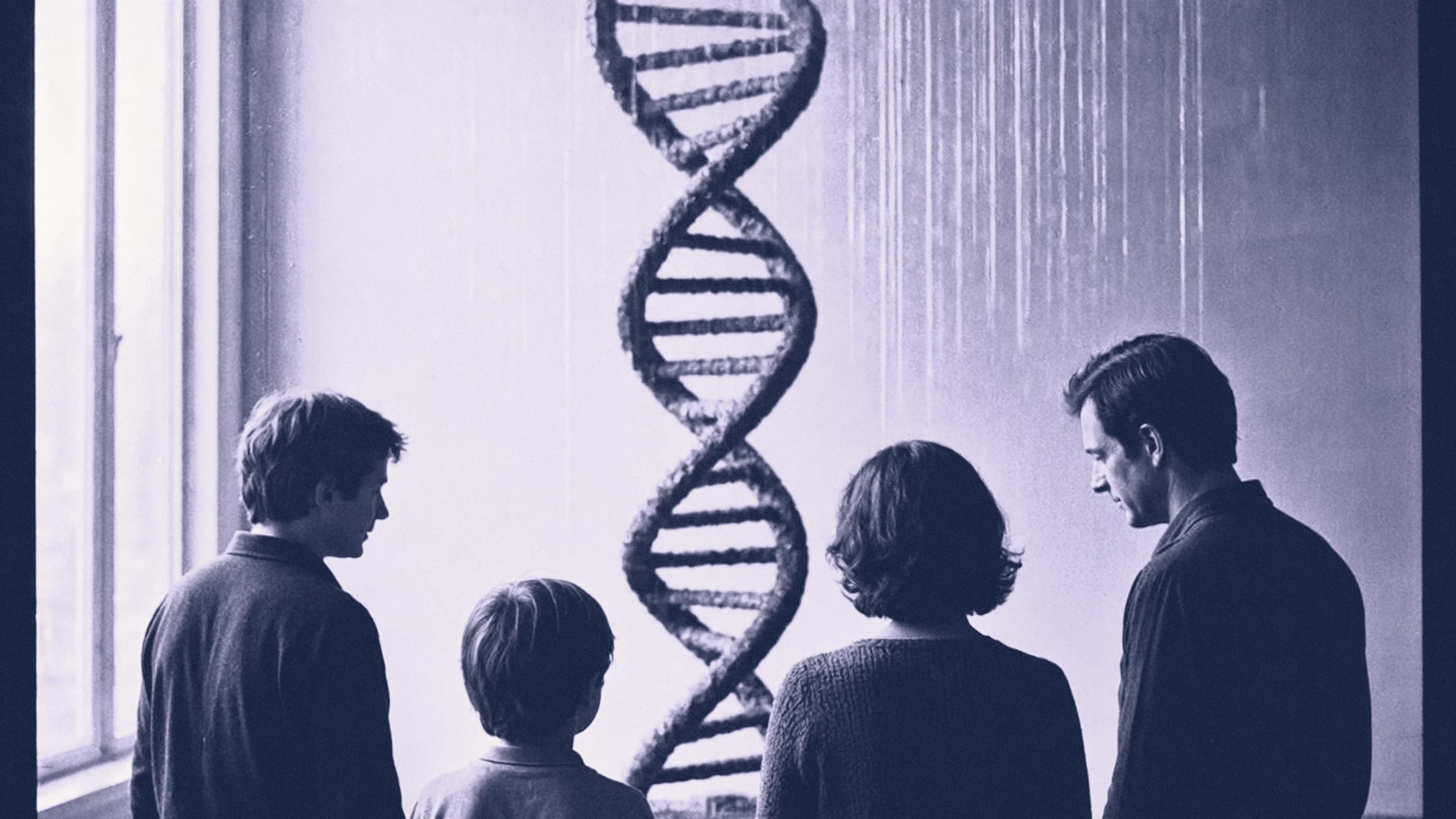
To explain my position, let’s take an example not from psychology but from genetics and the theory of evolution. The whole history of our planet is a struggle for survival and adaptation to ever-changing conditions. Development is evolution and mutation.
Yes, many biological species disappear while others change and adapt. Even if we set aside the theory of apes turning into humans, we can say with confidence that mutations happen within a species. They don’t happen quickly; sometimes they take thousands or millions of years. The Earth’s climate changes, rivers and lakes dry up, forests burn under the scorching sun. Water dwellers are gradually forced to adapt to new conditions. Over hundreds of thousands of years of slow climate change, they first become amphibians and then are forced to move onto land entirely. But only those that managed to adapt to the settled climate and kept the ability to reproduce will survive.
The principle of evolution is complex, but what we are saying is that every species has certain mutations and changes, and these changes go in several directions at once.
In some, fins turn into legs; in others, into wings. Which of them will survive the rest of the evolutionary race is unknown. Genetics doesn’t let us predict how successful a species will be. But it does answer a question that seemed to have no answer: “Which came first, the chicken or the egg?” From the point of view of genetics, the egg came first. An egg contains the genes of two parents at once, which is what makes it unique. From the point of view of evolution, whatever hatches from the egg will be a tiny step better than what produced it. And if something goes wrong while the embryo is forming, including genetically, we may get something entirely unexpected and incredible.
Let me turn to one of my favourite authors, the neuroscientist Robert Sapolsky, who puts complex ideas quite clearly.
Evolution happens in three steps:
This step needs a little more explanation. When the environment changes, species change. Because of certain influences (radiation, which everyone understands, or a cold spell or drought) the current generation of a species suffers losses. Outwardly they may all have been indistinguishable, but a particular set of unique genes allowed only part of the species to survive. The rest simply died, unable to adapt and without having had offspring. The surviving mutants will produce a new generation that differs even more from the previous one. And this unique set of genes is the biological defence tool for the survival of the species. It is there to adapt (to change on meeting a new reality) and to survive, preserving and growing the population. This is very much like what I wrote above about psychological defences.
A person’s psyche doesn’t belong to them alone: it is a vast path of change that has brought our species to its dominant position on the planet. Despite all the threat they pose to the Earth, humans have become the crowning achievement of the evolution the planet itself produced. I would call all this psychological genetics, or psychological inheritance. But there is one very important subtlety in all of this. Whereas genetic changes accumulate, psychological changes have to be passed on continuously from generation to generation. People live in society, and their psychological development depends on their surroundings not only from the first moments of life but from the moment of conception — and even from the first fantasies about them. Their future psyche will start to form from how their parents, their parents’ circle and society relate to them.
For example, China’s long-standing ban on having a second child created very serious collective psychological pressure. If one of the partners has, say, a manic personality structure, and one of their main inner tasks is to preserve themselves and their continuation in more than one child, how will they behave under such a restriction? They will suffer and try to get round the law. If a family has only one child, all the parents’ narcissism will be directed at that one child, and the parents will compete over who loves them more and whose narcissistic continuation they are.
And what if, in the parents’ eyes, the child isn’t good enough? Very often people unconsciously have many children because the ones already born don’t fully live up to their ideals. “This one didn’t quite turn out — we can have a new one, and it’ll be better.” Meanwhile the child who “didn’t quite turn out” will suffer from being unable to be themselves and will be hounded by the parents.
We can trace the consequences of this ban in hindsight. Quite recently China raised the number of children allowed to three; over the years the birth rate in the country has fallen catastrophically. Yes, a “one-child” generation has grown up, and they don’t want to start families or have children. Society starts to have a very strong influence on a person even before they are born. In one society it is preferable to have boys, since they are expected to feed and provide for their parents in old age. But the situation changes completely if the state is on the brink of war. It is the grown-up boys who will go to the front and most likely won’t come back, so there is no point in investing in them. Girls are what’s needed.
There are many such examples of society’s influence. A separate story is how a future child’s closest circle affects their psyche. Why are they being born? What unconscious meaning do the parents invest in them? Some couples have a child to save the family and to bind a partner who wants to end the relationship. Others, so that the child becomes an heir and helps preserve their status.
But most people want to turn their children into their own narcissistic continuation, so that the children will do everything they themselves didn’t manage. They send them to the clubs they wanted to go to themselves. They make them sing, draw, play musical instruments, or solve maths and physics problems from an early age. The parents believe that by the mere fact of being born, the children owe them. They pour all their fears and desires into the children and hound them for any failure to meet expectations, imposing their own dreams on them. What happens in this case? Under parental pressure a child may win Olympic gold or a Nobel Prize — but will they be happy? Won’t they end their life alone, never having found any meaning in it, drinking themselves to death or hooked on drugs?
A psyche that lets us survive.
It is psychological inheritance (combined with genetic predispositions) that forms a child’s own psychological portrait. From the earliest years the child takes on the main psychological defences of their closest circle. But, as I said, psychological defences allowed our ancestors to survive and have offspring, which means that for now they are optimal. A baby cannot survive without society (as the story of any real-life Mowgli makes clear).
DINA SANICHAR — A REAL-LIFE MOWGLI, RAISED BY WOLVES AND FOUND IN THE JUNGLES OF INDIA IN 1872.
Our parents received their psychological portrait from their parents and the society around them, and this chain goes all the way back to the dawn of humanity. We change and evolve; our psyche changes and evolves. Hence the eternal conflict between fathers and children. On one side, the wish for more freedom, more desires and their immediate fulfilment; on the other, the experience of generations in the form of prohibitions and restrictions. Yet it is these very prohibitions and restrictions that have proved effective — thanks to them we were able to survive. Let’s call it everyday life experience. It can range from the basic “don’t stick your fingers in the socket” to the more exotic “mushrooms with red caps and white spots, however pretty, must not be eaten”. Let me repeat the main idea once more: a person’s psychological defences are a good thing — they let us survive and adapt — but they make us suffer. And it is through this suffering that evolution happens. It is important to note, though, that evolution is not the selection of the best and the destruction of the worst.
Of course not. Some survived by dodging service and fleeing to another country, some worked on the home front, some hid in cellars and forests, and some fought and won. That is why psychology is more universal than genetics. Genetic adaptation is a complex and slow process, while the human psyche changes with every new generation.
And its main difference from genetics is that a child has to travel the whole evolutionary psychological path of humanity in just a few years.
By and large, all of a person’s main psychological defences are formed by the age of seven. By this age the struggle between inner desires and outer prohibitions that forms the Superego reaches its first logical conclusion. The person has absorbed the main restrictions of their family and their society. For the rest of their life they will unconsciously look back at them and compare them with the new, changed reality.
To survive in new conditions, they will have to keep changing. But basic defences stay with a person all their life, and in severe stress it is they that will kick in. If someone moves to another country where society’s rules are radically different, they will be able to adapt to them. But if they go through an emotional crisis or extreme stress, the body and psyche will choose the familiar pattern of behaviour and acting out. At a moment of extreme emotional or physical shock, a person will cry out “Mama” in their native tongue. You can see a vivid example in the Soviet film “Seventeen Moments of Spring”: the radio operator Kat gives herself away when, giving birth in the Charité hospital in Germany, she cries out “Mama” in Russian.
That is why I believe that far more important is the psychological, or mental, footprint we leave behind us every day. All our other decisions and actions depend on it — not only ours, but those of the generations to come.
Psychologist, MSc in Psychology · 7 years in practice
Editor-in-Chief of PSY.one.