


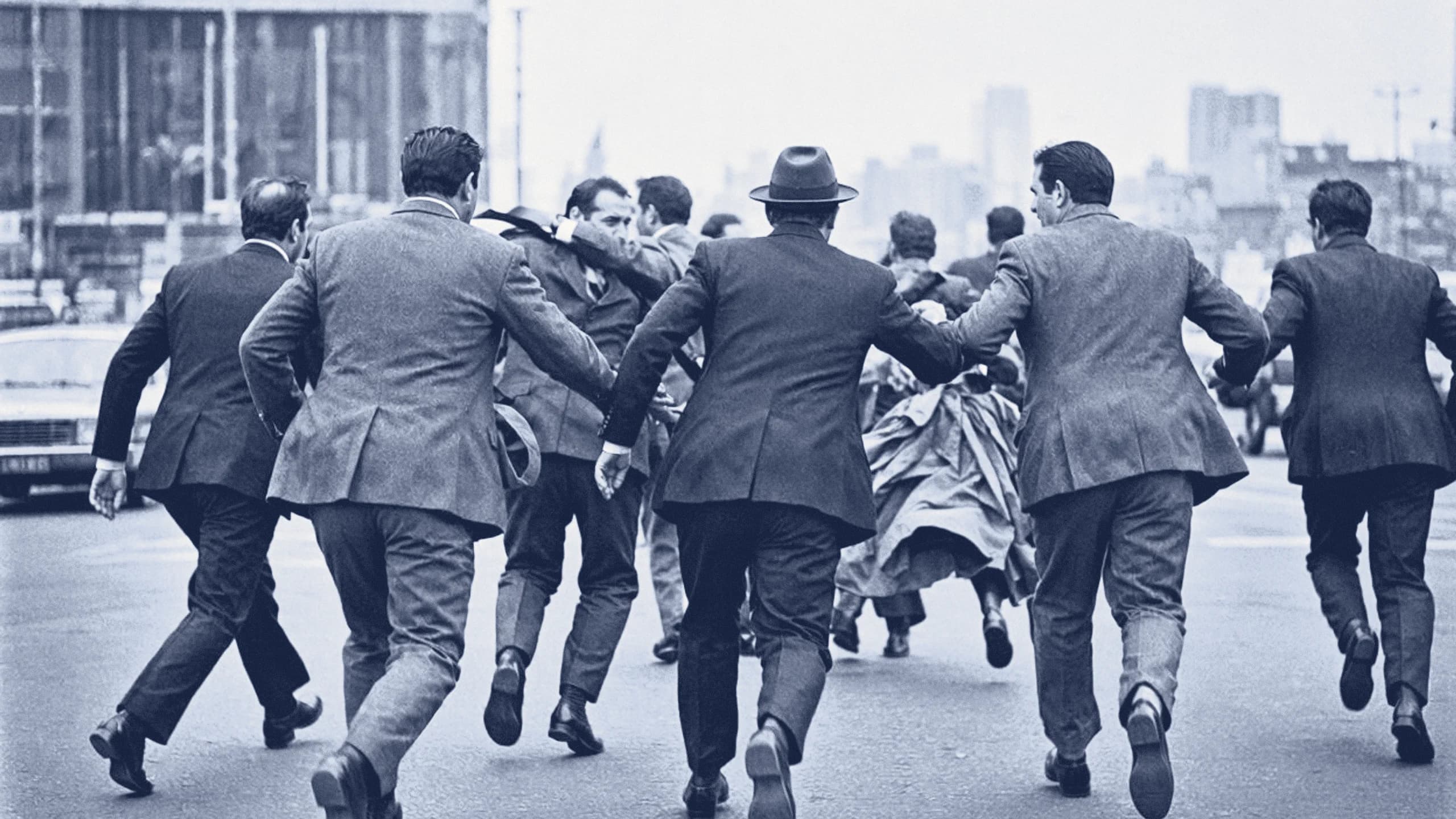
You may think of yourself as an onlooker, but the truth is that even if you don’t notice it, competition surrounds you everywhere.
Competition: it’s everywhere
We tend to think that competition shows itself only in open struggle — in sport, business or personal relationships. But is that really so? Competition runs through every area of our lives: our careers, our relationships with our parents, religion, generations and states. It is present in vertical relationships and in horizontal ones…
Competition is all-pervasive. In vertical relationships it is rivalry between bosses and subordinates, between parents and children. In horizontal ones, it is difficulties with business partners, investors or anyone on an equal footing with you in status, age, position or other criteria. For example, if you want to prove you are right to someone, you have entered into competition with them for the right to be right.
What do we compete for?
In our lives competition is aimed at different goals:
Resources (money, time, connections, power and so on)
Attention and love
Leadership and being first
Being better than someone
Think about it: what do you compete for in your life?
The roots of our competitive behaviour.
Our competitive strategies are formed early in life, in our interactions with our siblings — our brothers and sisters. And if we had none, with other children our age — classmates or the kids next door.
Have your parents or grandparents ever compared you with other children your age, neighbours or classmates? “Katie learned her poem better, and look how neat Peter is.” All of this is that very competition we enter into without even wanting to. And our reactions, the emotions we freeze in at the moment of comparison, and our relationships with our parents and siblings shape our approaches and strategies in competition. In such situations some people make an unconscious decision to prove at any cost that they are better than Katie and Peter, and they behave like this in any situation with an element of competition. Some freeze and avoid competition, and some decide that they have lost in advance, because “well, Katie or Peter is better than me”.
As a result, these decisions about ourselves made in childhood affect how we behave in business — with our partners, employees, investors and so on. It is vital to be aware of these strategies if you want to adjust and improve them.
Inner competition: the struggle with yourself
If you think competition has nothing to do with you, you are very much mistaken. Competition exists not only outside but within us. Inner competition is a struggle between different parts of our psyche. Each part has its own motives: one strives to reach goals and get pleasure, the other seeks safety and stability, avoiding change and new actions even when the first part wants them. This opposition creates inner tension and keeps us from acting coherently and effectively.
When the goals we want coincide with safety, we reach them easily, without overstraining. But unfortunately our desires and goals often raise doubts, fears and worries, because for the psyche achieving them means something new and unknown. And although at the level of consciousness everything is logical and safe, the psyche will resist these changes.
The clear symptoms of inner competition include procrastination and resistance. Procrastination is when we want to do something but can’t get started. Resistance shows itself, for example, in forgetfulness or in putting important things off until some later date. This struggle takes a great deal of energy and leads to anxiety, fatigue and apathy.
How often do you put things off? Could it be the result of inner competition?
We may also avoid external competition without noticing, because to the psyche this may seem the safest strategy. But in fact it has a number of negative consequences, both in life and in business. People who avoid rivalry often miss opportunities for personal and professional growth. In business this can mean a lack of innovation, lower competitiveness and lost market share. Avoiding competition can also lead to inner dissatisfaction and a sense of unfulfilled potential. In personal life, giving up rivalry can limit social connections, get in the way of personal goals and lower self-esteem. In the end, avoiding competition robs us of the drive and motivation we need to succeed and fulfil ourselves.
A real-life example
Ivan, a fairly successful entrepreneur, couldn’t understand for a long time why his business wasn’t growing. He came to coaching full of anger and irritation, exhausted because all his attempts to grow had failed. Together they found out that as a child he had constantly been compared with his older brother, and that was when he had decided to avoid competing with someone supposedly stronger, smarter and cooler than him. He decided to stay in the middle.
For a while that was enough for him. But if we suppress our true desires for too long, they burn up our energy and our joy in life. And after just a month and a half of work, things took off. He finally understood that all his life he had been afraid to overtake his brother, because otherwise he would be punished. These fears may seem childish and insignificant, but until we become aware of them they have power over us and hold us down!
How to overcome the negative effects of competition?
In inner competition we also compete with our Ideal Self — the self you dream of being, who has everything you want. If you have ever scolded yourself for failures or shortcomings, your Ideal Self has lost the competition to another part of your psyche. What would you call that opposite part?
In such situations a person inevitably faces a deep disappointment in themselves. And then they may lose heart, want to give it all up and feel that this business “isn’t for me”; their self-confidence goes, and the pleasure of life seems not to exist. Yet all that was needed was to understand what this disappointment is connected with and to digest it. It is extremely hard to understand such things on your own — the psyche will defend itself against it. But with experienced professional psychologists and coaches it is all possible, safe and fairly quickly resolved.
Competition is an integral part of life. It is present everywhere, from business to personal relationships and our inner world. Understanding and managing it helps us not only succeed but also find balance and harmony in life.
Exploring your own competitive strategies is a key step to success. A psychoanalytic coach can help you understand your inner mechanisms more deeply and uncover the hidden motives that shape your behaviour. For example, a client working with a coach can learn to:
Overcome procrastination and act more decisively.
Manage inner conflicts, reducing anxiety and stress.
Improve relationships with colleagues and loved ones by understanding their competitive motives.
Reach their goals by bringing inner desires and fears into harmony.