Many people, not knowing the nature of dreams, try to get rid of them. Strong sleeping pills, alcohol and interrupted sleep all come into play. All of this is a time bomb. We plant it ourselves and keep pumping it full of incredible power. It is bound to go off at an unexpected moment, with terrible results — from deep depression to a nervous breakdown or a serious illness, cancer for example.
Can dreams help us get through a crisis and make our dreams come true?
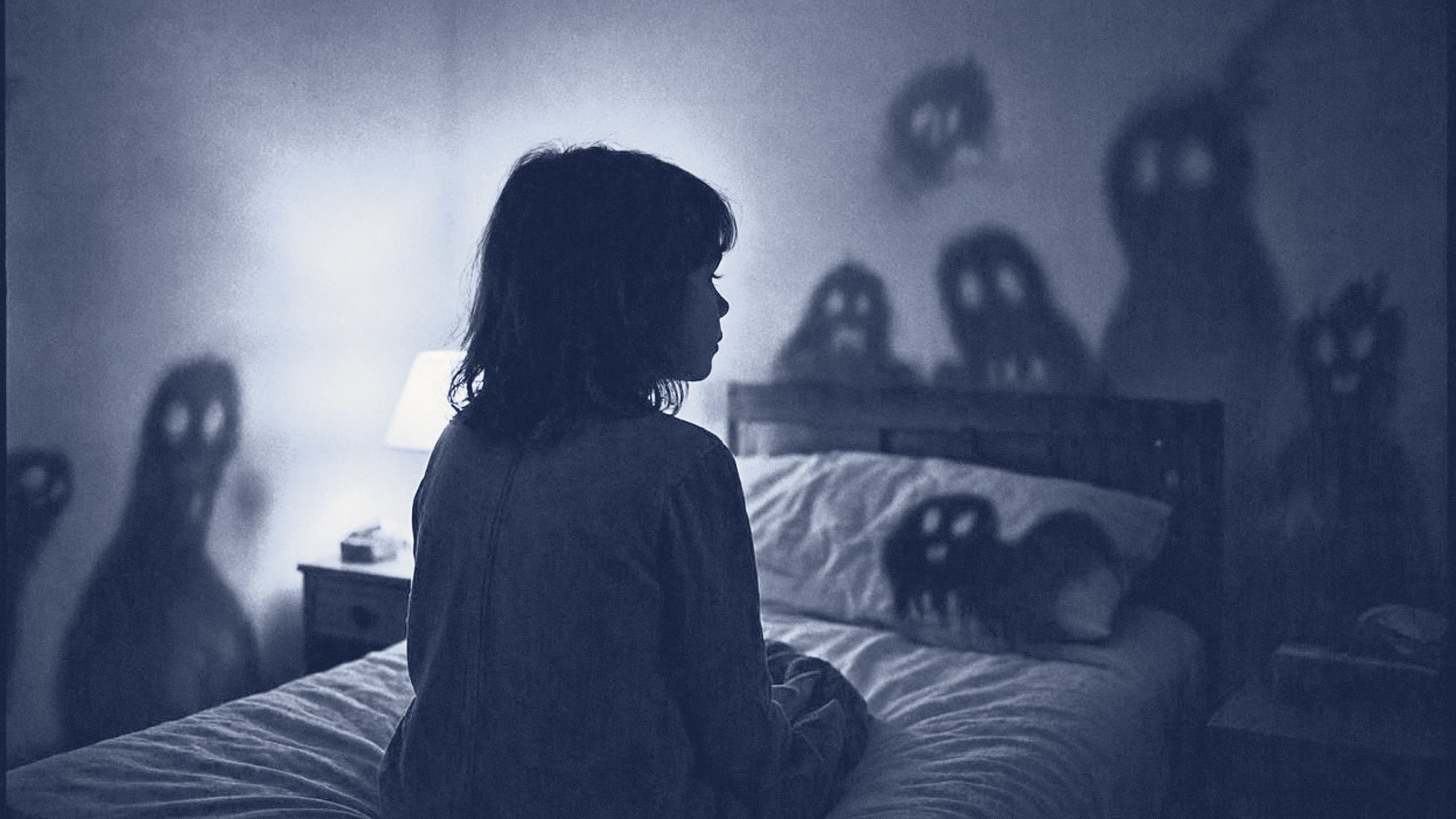
Everyone dreams, but not everyone can remember their dreams. A dream is the work of the unconscious. It is in its depths, hidden at first sight, that treasures lie. But the dark cave holds not only mountains of gold but also our most secret fears and desires — everything we were ever afraid of: childhood hurts, frights, bad people, scary books, spiders.
When we talk about dreams, it is always important to notice the little things.
Is the dreamer taking part in the nightmare or watching from the side? Who is on stage — familiar faces, or invented characters? Even if a dream seems to repeat itself unchanged, take a closer look. Perhaps something has changed? A fly suddenly appeared, or a breeze blew. That means the psyche is at work and trying to save us.
My client was deciding where to live
She had travelled almost the whole world — on business trips and on holidays with her family. After a painful divorce she had a bad fall and broke her collarbone. At 56 she felt young and attractive, but whenever she approached a mirror she realised that the life was being drained out of her. Her hair was turning to straw, her face was sagging, her breasts had fallen. It was dreadful to go outside, to go from doctor to doctor, to be helpless. She didn’t want to see anyone, talk to anyone or ask for support. She tried to cry in our sessions, but she didn’t even have the strength for that. Her request was: “I feel terrible and frightened, and I don’t know what’s happening.”
All her life my client had run a business, built a family and raised two children.
The children grew up and moved abroad; her husband left her for a young lover. Too ordinary a fate in our country.
But as Leo Tolstoy said, “All happy families are alike; each unhappy family is unhappy in its own way.”
The same is true of an individual person. This woman’s story deserves a place in a book of the nation’s heroes. Having built a business from scratch in the harshest of conditions — her own children going hungry, her husband drinking — she got everything that mattered so much in the society around her. Two flats in the city centre, a house in the country. She got her husband a job in the civil service — prestigious, but he never brought home any money. Two expensive cars for the family, the best schools for the children and an education abroad. Everything the neighbours gossiped about and yesterday’s classmates envied. She coped, she beat everyone, she was envied — and yet she never won her mother’s recognition. Although her mother lived in a new house at her expense and was treated in the best clinics, she couldn’t stand her grandchildren and never once said “thank you” to her daughter. She only threw barbed complaints at her.
Her mother, a former Communist Party official, treated “traders” and “businessmen” with open disdain.
When she died, her daughter not only gave her a lavish funeral and put up a monument but also found a writer to tell the heroic story of her mother’s life. On reading the first drafts of the book, my client literally howled with inner pain, cancelled the contract with the writer and never went to the cemetery again.
She saw the senselessness of her mother’s Party career and recognised her own loneliness — the darkness of the childhood that had surrounded her. Not a day of happiness, not a day of joy, not a day of carefree childhood. The price of her mother’s career was her own happy childhood.
The dream she brought to one of our sessions was about life at the dacha.
She dreamed of her childhood in a wooden house with an unusual porch. It was spacious: two windows meeting at a corner, a big old chest, two spring beds piled with feather quilts and pillows with embroidered lace covers. She loved bringing her friends there. Together they tried to open the chest, jumped on the beds, fell onto the floor among the pillows they had scattered, and made paper aeroplanes and cute little animals out of newspaper. Grandma brought pies and fresh milk bought in the next village.
This dream seemed serene and happy, but frightening at the same time.
It tormented her with its persistence. Why was she dreaming of this childhood, and why did she remember the porch, the children’s fun and her grandmother down to the smallest detail?
We began to go over the details. I seized on the chest — there had to be a secret in it! I asked whether they had managed to open it and what was inside. My client described in detail the rough blackened wood, the metal clasps and the pattern running all the way round it like a ribbon on a cake. But in this dream the chest turned out to be just a box of quilts and pillows. It held no secret. We explored the carefree dream of childhood for a long time — until my client froze. “The window!” she said, pointing behind her. Goosebumps ran over her body.
The window!!! She began to breathe more deeply and carefully, as if she had been caught red-handed doing something indecent. Her face flushed. There was another window in the porch — not onto the street but into the house. Through it you could see perfectly well what was happening on the veranda. In that window she saw her mother’s eyes, full of rage.
I let her be silent for a while. After a couple of minutes she said that her mother had cursed her for a paper hat on her head.
I was surprised: “For a paper hat?”
She said yes! For a paper hat made from a newspaper — with a portrait of Lenin and the Party leadership.
I was also born in the Soviet Union and remember the legends about denunciations and high-profile trials of people who had wrapped a stick of sausage or a fish in a newspaper with the leaders’ portraits. But I didn’t think it was real. And what struck me even more was that someone could curse their own daughter over a child’s prank.
My client found the meaning of the dream herself, quite quickly.
Her mother’s eyes, full of hatred, had followed her all her life. She had tried to please, to be good, to live with a husband she didn’t love and to give her children what she had never had. That gaze bore into her until the moment she screamed a silent scream of despair while reading the drafts of the book.
Our sessions ended after she decided to move and find a new home. She wanted to get back her life and the strength she used to have. She wanted to be bad, to break the rules, to treat herself spontaneously without looking back at that notorious window in the porch. In our last session I suggested she use Dalí’s method to choose her new home unconsciously. She had enough money. It seemed to me she could live anywhere in the world, and that she was ready to be happy at last.
Now she lives near the ocean in Portugal. She has a small but cosy house with a veranda, a new partner a little younger than her, and a chest that holds not bed linen but photographs of her past life — successful, but spent serving others.
In this story I want to point out an important detail. Our success in life is always linked to a huge inner conflict. Like a nuclear reactor, it provides boundless energy for great achievements in creative work and in business.
There is an important secret I want to share.
The time always comes when this inner conflict has to be resolved once and for all.
However much money we make, however many millions of people we amaze with our creative work, however many books and magazine articles are written about us, the moment always comes when we say: “Give me my life back! Take everything, but give me back that lost moment of happiness.” It is very important that these words are spoken not on our deathbed, under a mother’s cursing gaze, but much earlier. Give yourself the chance to finally live with love and inner happiness.
Psychologist, MSc in Psychology · 7 years in practice
Editor-in-Chief of PSY.one.