Alongside the coronavirus crisis, the world faced another pandemic — a pandemic of conspiracy theories.
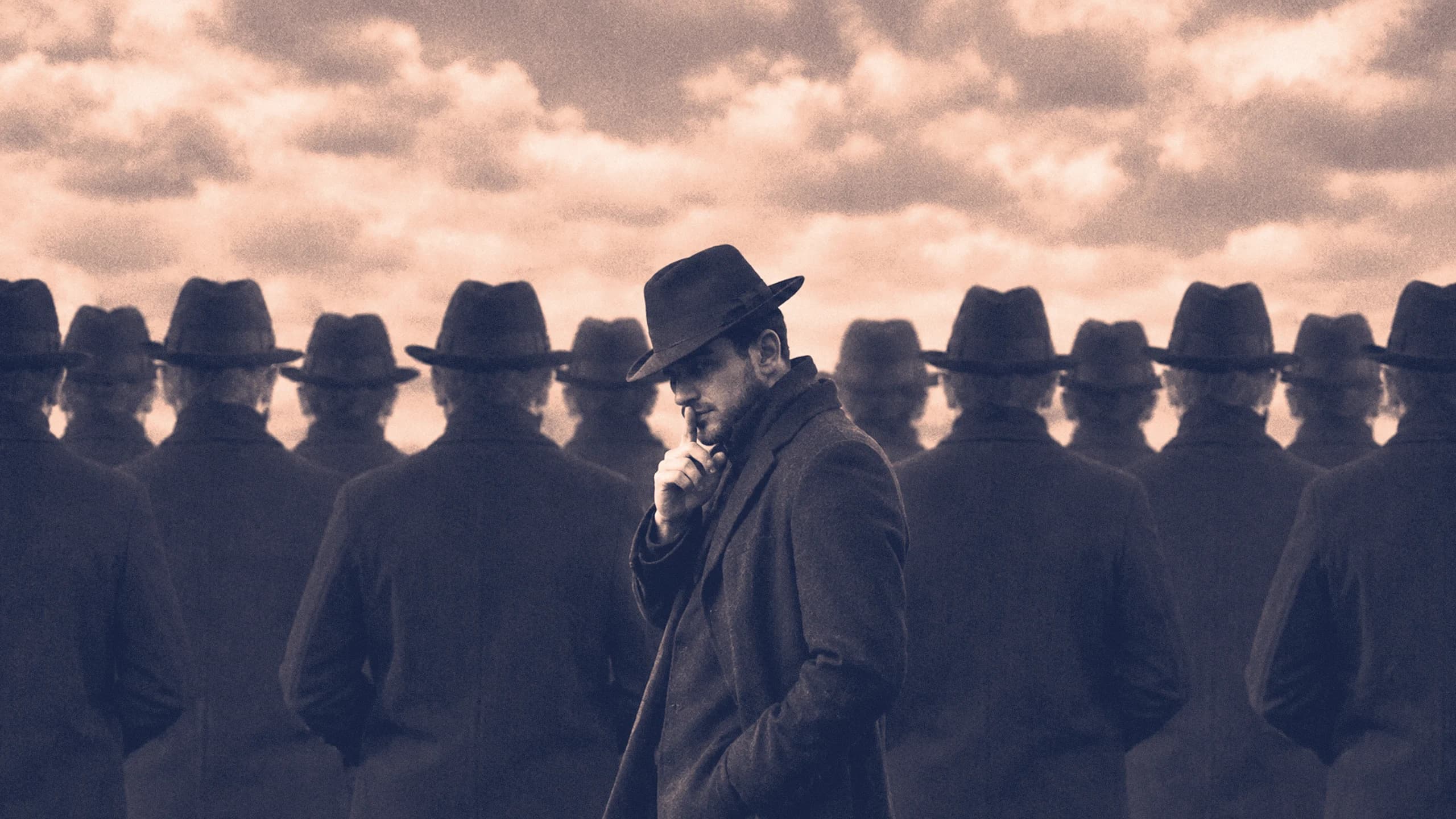
For all their variety, conspiracy theories share the same basic structure: there is a certain group of people who control everything that happens in the world.
The historian Yuval Noah Harari explains the popularity of conspiracy theories by the fact that the modern world has become too complex and multifactorial to understand and manage, while conspiracy theorists offer a single, simple explanation of complex processes. On the one hand, the follower of such theories gains a sense of control (“I understand something about this world”); on the other, a sense of belonging to a chosen few (“We understand what’s going on, and they don’t”).
Psychologically, this is a defence mechanism — omnipotent control, which overcompensates for the powerlessness and helplessness we have to face from birth.
To some extent, omnipotent control and a sympathy for one conspiracy theory or another are common to most people, so there is no need to rush to label everyone paranoid. In his book “Russian Conspiracy Culture”, Ilya Yablokov notes that a conspiratorial view of the world is not the preserve of marginal people but part of culture from antiquity to the present day (and of populist rhetoric, from “official” to “opposition”).
Omnipotent control is a primitive — that is, very early — defence mechanism. A newborn baby does not yet separate itself from the outside world and does not understand that the adults caring for it are separate. For the baby, everything is one whole: I am the World. I am the source of everything. “His Majesty the Baby”, as Freud put it. A mother who is well attuned to her child meets its needs appropriately and quickly. It gets hungry — it is fed. It gets cold — it is warmed. The infant experiences itself as having “materialised” the milk and the warmth. At an early stage of development this illusion of grandiosity, the fantasy of controlling the world, is normal. It is also, by the way, the basis both for elements of magical thinking in adults and for a basic trust in the world as a whole.
As the child develops, this omnipotence is projected onto those who care for it and on whom it is completely dependent — usually the parents. Now, in the child’s mind, Mum and Dad control the whole world. Later the same is partly transferred to teachers, managers, the government and other authority figures.
Eventually we have to take an adult position: no one is omnipotent, no one controls absolutely everything, there are limits. We can’t do everything, but we can do something.
But at moments of crisis we regress, to a greater or lesser degree, to an infantile position — that is, we slip back psychologically to earlier stages of our development. “I am facing a level of uncertainty I cannot bear. I control nothing. So someone must control everything! So there are people who know exactly what they’re doing, who calculate everything, and everything happens according to their plan. They are responsible for all of this. I’ve figured out how it works — and in doing so I have regained an imaginary control over the situation.” The defence mechanism has done its job.
Conspiracy theories are also a way of building group and even national identity.
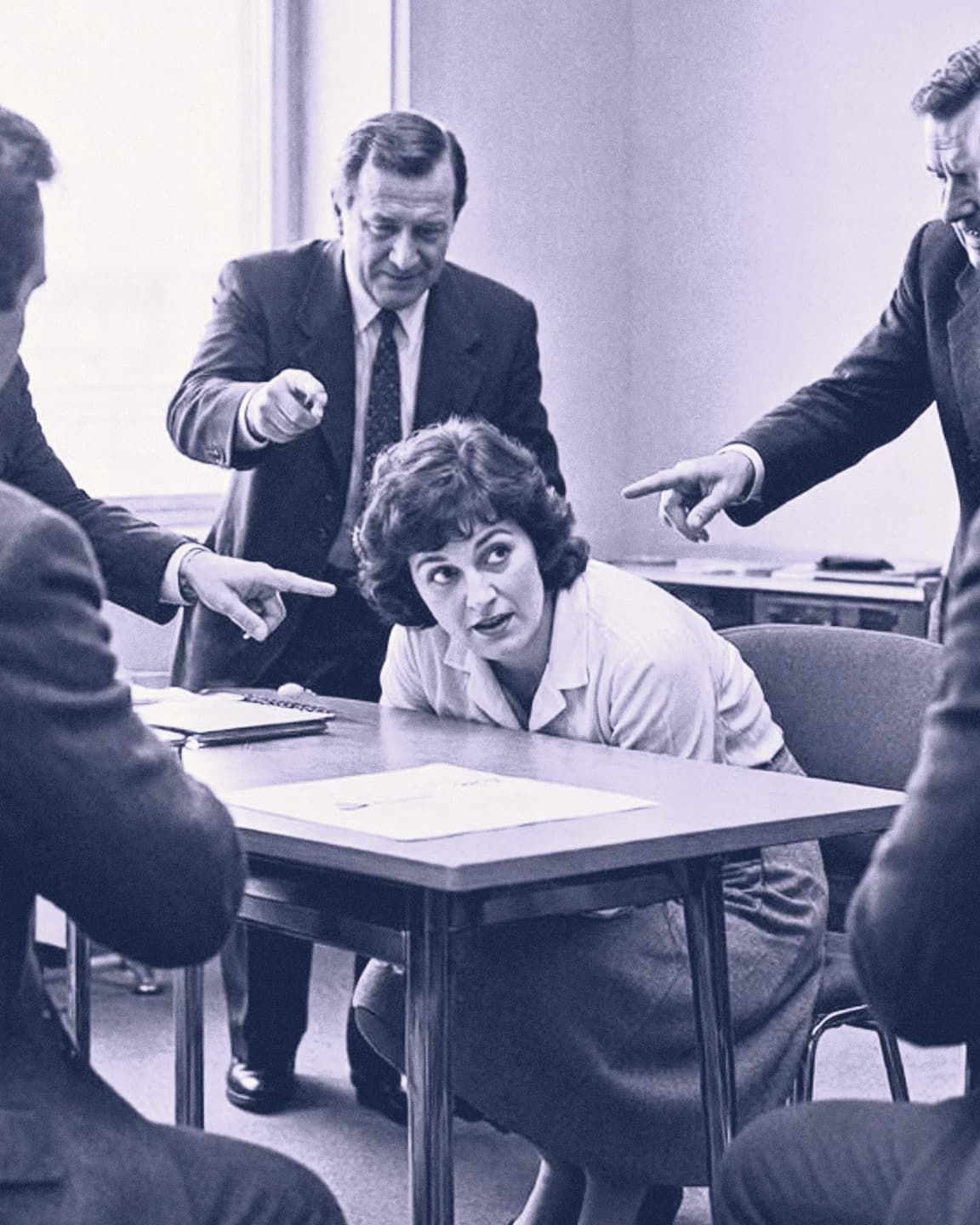
Identity is about “Who am I?” — whom I belong to and whom I identify with. Conspiracy theories become especially active during a crisis of self-definition. Identity then arises not from within, not from values a group shares, but by distinguishing oneself from someone else. Instead of “We are such-and-such” comes “We are not Them”.
Society splits into “us” and “them”. And this other, this outsider, is always hostile and always dangerous. The picture of the world becomes binary, borderline: black or white, with no shades in between. Whoever is not with us is against us.
The demonised other is also a throwback to early experience, when the infant does not psychologically separate itself from the world around it (I and not-I). This is the basis of the defence mechanism of projection: what is inside is mistakenly perceived as outside. A person “throws out” the denied and negative parts of themselves. Their own aggressive impulses are ignored in themselves and attributed to others, usually in concentrated form. This is how the sense of persecution typical of paranoia arises. Projections relieve inner tension for a while and take responsibility off a person (not “I am irritated” but “people are looking at me funny”). But as a result we risk seeing people and things as they are not.
For Russian society, that crisis of identity was the collapse of the USSR. The old identity of the Soviet person fell apart. The new identity of a citizen of Russia is unstable, swinging from nostalgia to denial. How should we relate to the past — the imperial, the Soviet, perestroika? How should we judge the present? Where are we heading?
In his book “The Inconvenient Past”, Nikolai Epple writes that the reason we are so gripped by the past today is that it has not been worked through: the work of mourning has not been done and there is no coherent narrative. This shows at every level — personal, family and national history. The author compares how different countries have rethought their past and dealt with collective trauma. We are not unique in this. Hence the mutual accusations between states of falsifying history — the same mechanism of projection again.
An individual going through grief (for example, after losing a partner) faces several main tasks. First, they need to accept the fact of the loss and feel their feelings — pain, anger, guilt, shame — instead of trying to suppress them. Then, gradually, in small steps, they rebuild an ordinary routine: they learn again how to make breakfast, go to work and enjoy life’s small pleasures. Finally, in time, they can let go of the past and look to the future, towards new relationships. Nations go through roughly the same process. Or they don’t — they don’t do this work of mourning. Grief, guilt and shame are denied. In their place comes a defensive triumph (“we can do it again”). The circle closes. The past won’t let go.
“To regain your own past, you have to tell it to yourself anew.” That is exactly what psychoanalysis does: it helps a person fill in the blank spots in their personal history, make their life experience their own and find their identity, their true self.