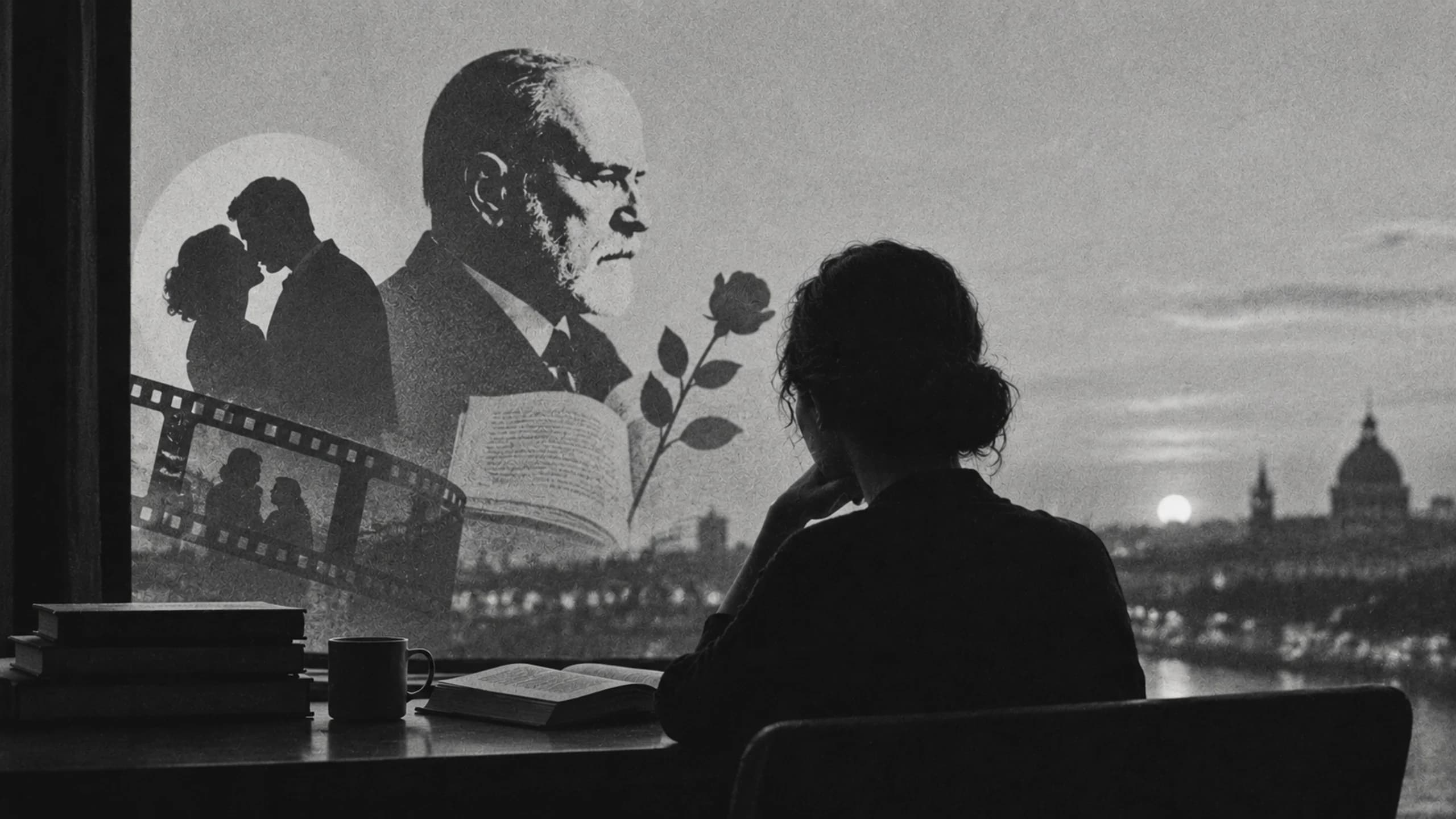
Let’s look at a few key definitions of love — and since I specialise in psychoanalysis, let’s start with Freud.
Love and psychoanalysis
Freud linked love with libido — the energy of sexual desire.
Freud also introduced the idea of primary narcissism, when a person directs libidinal energy at themselves. In his view, romantic love rests on the search for an object that fulfils our inner needs.
Example:
“Anna Karenina” — Anna and Vronsky’s relationship can be seen as an expression of libido and a search for an object to resolve inner conflicts. Their love begins passionately but ends tragically, out of dissatisfaction and inner disillusionment.
Love and object relations theory
The well-known British psychoanalyst Melanie Klein focused on how our early relationships with our parents shape our idea of love. She stressed that our capacity to love is linked to early experiences of attachment and loss. Childhood scripts repeat themselves in adult love.
Example:
“Twilight”. Bella Swan’s relationship with Edward Cullen also reflects the idea of object relations. Feeling out of place and often lonely, Bella finds in Edward not only a lover but a rescuer. Her strong attachment and readiness to sacrifice herself for Edward may be linked to a search for the safety and protection she lacked in ordinary life.
Psychological theories of love:
The three components of love, according to psychologist Robert Sternberg:
Intimacy — emotional closeness and mutual support.
Passion — physical and emotional arousal, including sexual attraction.
Commitment — the decision to be together and to sustain the relationship.
Example:
“Romeo and Juliet” — a vivid example of passionate and intimate love, in which the young lovers sacrifice everything for each other, leading to a tragic end.
The six styles of love identified by Canadian psychologist John Alan Lee:
Eros (romantic style) — first, youthful, passionate and emotional love.
Ludus (playful style) — love as a game.
Storge (companionate style) — love as friendship.
Pragma (pragmatic style) — practical love.
Mania (possessive style) — obsessive involvement.
Agape (altruistic style) — unconditional love.
Example:
“Titanic” — Jack and Rose’s story shows the Eros style. Their love begins with a powerful attraction and ends in self-sacrifice, when Jack gives his life to save Rose.
Love as an art
“The Art of Loving” is a book by the famous psychologist Erich Fromm.
Fromm believed that love is an art that requires knowledge and effort. It includes care, responsibility, respect and knowledge of the other.
Example:
“Moscow Does Not Believe in Tears”. Katerina, the heroine of the film, goes through several love stories that reveal patterns of behaviour and expectations formed in her youth. At first she strives for outward success and recognition, but in the end she finds true happiness and support in Gosha, who helps her overcome her inner complexes and fears.
Love is a complex, many-sided feeling that can take different forms depending on personal and cultural contexts. It can be passionate, as with Romeo and Juliet, or destructive, as in “Anna Karenina”. Psychologists offer different theories to explain it, and each of them opens up new aspects of human nature and relationships.
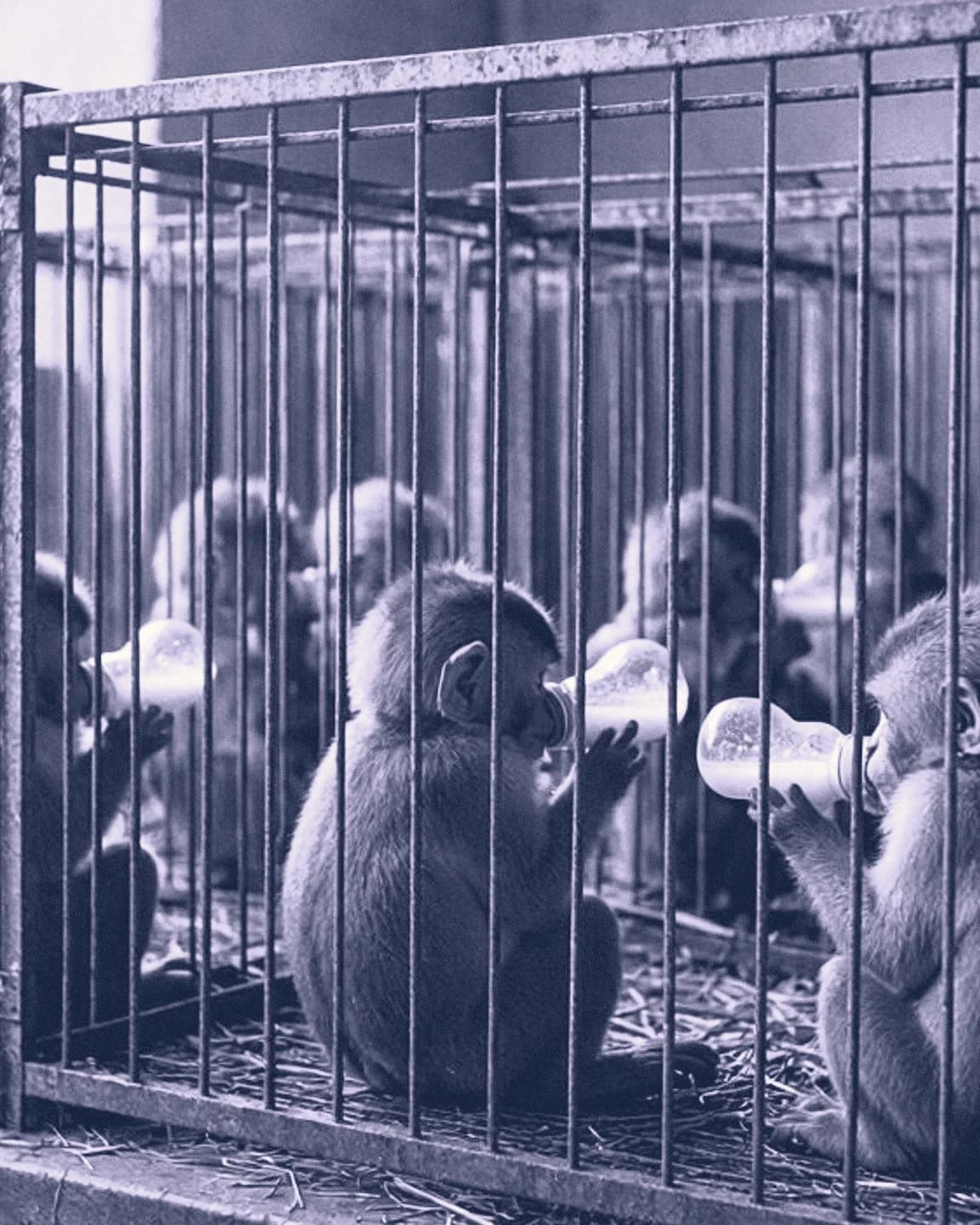
A few years ago I gave a lecture on “the nature of love” and described a disastrous experiment carried out in America. In the 1950s the psychologist Harry Harlow was hailed as the man who had solved “the problem of love”. He experimented on rhesus macaques: he separated infants from their mothers and peers and placed them in a cage with two surrogate wire “mothers”. One had a bottle of milk; the other was wrapped in a soft towel.
The infants preferred to spend their time with the “soft mother”, hugging her and pressing against her, and went to the wire “mother” only to feed. When placed in a new setting, they were very stressed if only the wire “mother” was there and calm if the soft “mother” was. Harlow believed the soft “mother” could replace a real one and that this was the secret of love. But his triumph was short-lived.
Macaques raised by “terry-cloth mothers” could not adapt to life in a group. They avoided contact, could not form pairs and harmed themselves. To study how their offspring would behave, Harlow built a device for forced mating. The females were firmly restrained so that males could mate with them. Twenty infants were born as a result. Their fate was sad: most of the females killed their young or were indifferent to them, and only a small number showed maternal care.
Conclusion:
When we try to grasp the essence of love — an essence that should be the same for everyone — we are, sadly, going down a dead end of reasoning and research. Love is many-sided, unpredictable and complex. It brings happiness and pleasure, then gives way to fear, anger, disappointment and depression. There are no rules in love — only hidden desires and a path. Freud’s famous paper “Instincts and Their Vicissitudes” comes to mind. Each of our drives has its own tangled fate with an unknown ending.
Psychologist, MSc in Psychology · 7 years in practice
Editor-in-Chief of PSY.one.