

The other day I came across a video on social media of a young antelope giving birth in an African nature reserve.
In the middle of the birth the antelope was attacked by a leopard. The antelope leapt away and fled, and at that moment her calf dropped to the ground right in front of the approaching predator. For a moment I thought the calf’s life would end there, but things changed abruptly. The leopard began to sniff and lick the newborn antelope. The reserve’s wardens filmed this pair for several years. The leopard became a mother to the calf and raised it. The antelope grew up but still treated the leopard as its mother.
The first moving object the calf saw, right at birth, was a female leopard.
Such a sharp change in the leopard’s behaviour — from the aggression of the hunt and the chase to curiosity and care — can be explained by the newborn’s smell. After all, that is how she smelled when she was born, how her brothers and sisters smelled after birth, and how her own cubs smelled. We might call it imprinting on a smell, which awakened the maternal instinct. There is no threat in this smell; it is the smell of childhood, safety and care. The calf, in turn, had seen nothing since birth but the leopard licking it. It was at this particular stage of development, thanks to outside stimuli — the leopard’s care — that an innate programme was triggered in the antelope and the image of a mother was written in. This mother isn’t its own. In effect it was an orphan, but in this case imprinting allowed the calf to find a foster mother — any foster mother — and survive.
Imprinting is not associative learning. What sets it apart from the conditioned reflexes of “Pavlov’s dogs” is that imprinting happens without reinforcement. The neurons that trigger imprinting set off an innate programme, as it were. The young animal chooses its mother unconsciously, simply because it needs her to survive. But this choice, which will be engraved in memory forever, takes time. Neurons form new connections.
Imprinting.
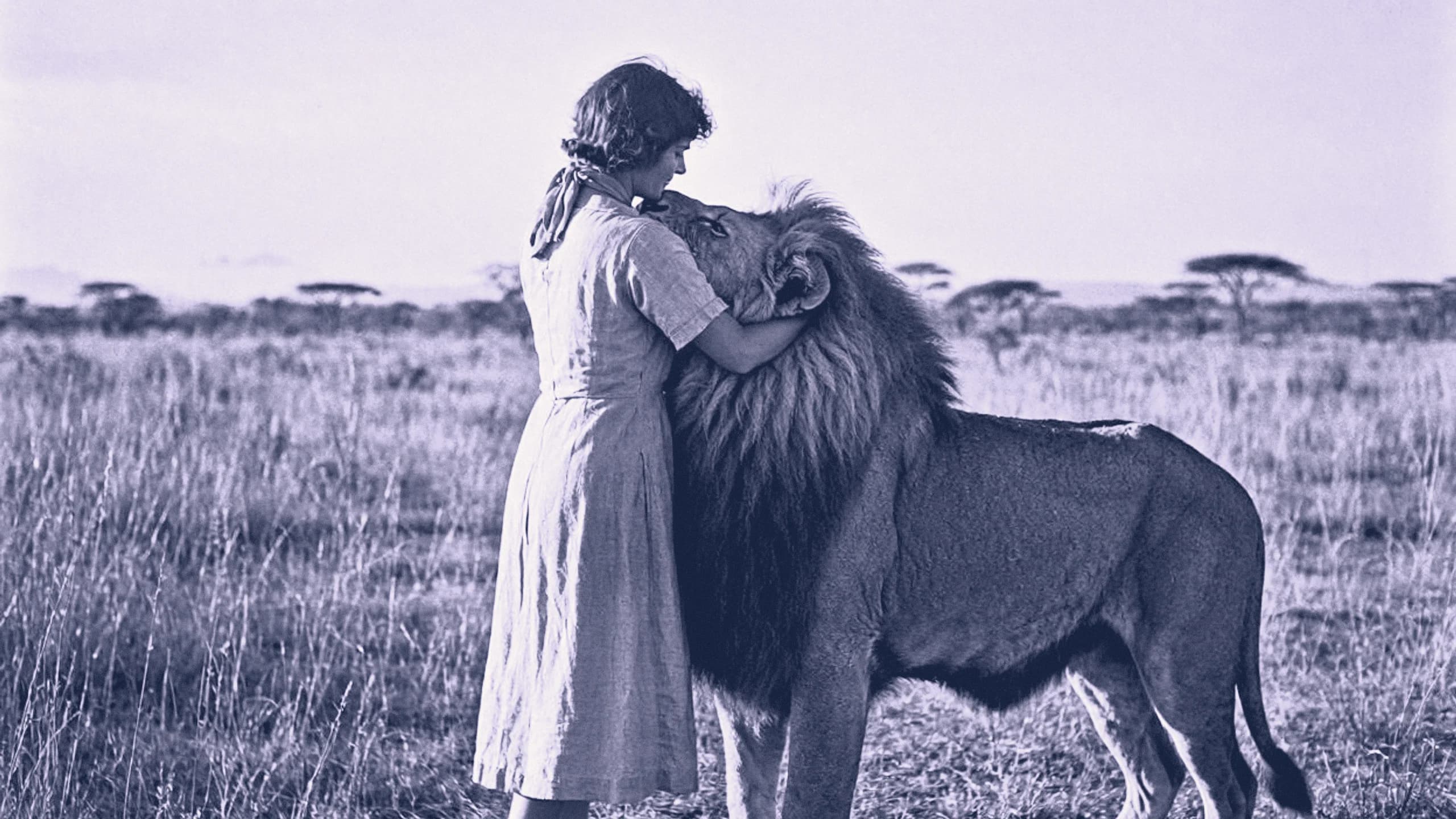
Signals reach the neurons from a huge number of sensory receptors (smell, colour, touch), and gradually a new image takes shape. The cascade of this reaction runs so deep that it can reach the DNA in the cell nucleus (through a sensory stimulus via the neurotransmitter glutamate and second messengers, whose synthesis in this case is driven by metabotropic receptors). In the end, thanks to the production of new proteins and messenger RNA, new receptors are built into the membrane at the most active synapse. The synapse starts working more efficiently. This connection lasts a lifetime. Such imprinting is easy to see in wild animals — for example, when lion and tiger cubs are raised by breeders in a family and then released into the wild in a reserve. Meetings between the grown predators and their breeders are always touching. They recognise their image, smell and voice from afar and, like little kittens, try to jump into their arms, lick them and even, overwhelmed with feeling, nip them gently. I was shown such a video in Venezuela: the breeders filmed their first meeting with animals that had lived in the wild for several years.
The term imprinting was proposed by the Austrian zoologist and animal psychologist Konrad Lorenz, who studied the behaviour of greylag geese for many years. In geese the most active phase of imprinting began 13–16 hours after hatching and lasted only one day.
Imprinting is triggered by genetic predispositions combined with stimuli from the environment. The next step is the imprinting of the image and further learning of habits and behaviour. Imprinting is accompanied by protein synthesis and changes in synaptic structure. The British biologist Steven Rose observed increased protein synthesis in a chick’s brain. In the experiment, the nerve pathways carrying visual information from one hemisphere to the other were cut, and then one of the chick’s eyes was covered. The half of the brain connected to the open eye showed higher protein synthesis than the half connected to the covered eye. During memorisation, the newly made proteins attach to the strongest synaptic connection and not only strengthen it but change it.
In one article I read that Lorenz also linked imprinting to brain rhythms. Their frequency varies with age: in newborns it is delta (0–4 Hz) and theta (5–7 Hz), in children before puberty alpha (8–13 Hz), and in adults mainly beta (13–25 Hz). Lorenz concluded that a person may be subject to imprinting vulnerability.
By creating conditions in which the brain works at “childhood” frequencies, existing imprinting programmes can be changed and new ones created. I could not confirm that it was Lorenz himself who studied brain frequencies and imprinting vulnerability; perhaps it was his followers. But the very fact of such research and conclusions could open up a new branch of psychology for effectively freeing people from childhood psychological trauma.
In the course of his research, the Czech-American psychiatrist Stanislav Grof concluded that a person can bring back early experiences hidden in the unconscious. He introduced the concepts of systems of condensed experience (COEX) and perinatal matrices. In his theory, a COEX system consists of imprinting and the conditioning of experience crystallising around it. In other words, our brain holds all the information about our life — it is just very hard to find. Most often this information is sewn into our unconscious. It leads a person to relive, from time to time, situations linked to traumatic childhood experience. It is from this experience that the affective situations leading to neuroses and psychoses are born.
Falling back into childhood.
I would add that there are known cases in which, under hypnotic regression, brain activity slows to “childhood” rhythms. During these periods a person can remember facts that lie deep in unconscious memory. Most importantly, under hypnosis this imprinting can be changed. A similar effect is seen with LSD. Imprinting vulnerability can also be caused by very severe stress and psychological trauma and lead to imprinting (impressing) in adulthood. This in turn leads to new attitudes. I know a woman who all her life was attracted only to men and wanted children, but after a brutal rape and the trauma that followed she became homosexual and now has relationships only with women.
In the 1950s the American psychologist Harry Harlow experimented on rhesus macaques. He separated infants from their mothers and peers. In one experiment Harlow placed a newborn in a cage with two surrogate mothers made of welded wire. One wire figure had a bottle of monkey milk fitted into it; the other was wrapped in a terry towel. The results were astonishing. The infant spent almost all its time with the towel-covered surrogate, hugging it, touching it, pressing itself against it. It went to the cold wire mother only when it was hungry — after all, only she had the bottle of milk. After a while the infant was placed in an unfamiliar setting. If the wire mother with the milk was in the room, the macaque was terribly stressed: it trembled and huddled in a corner. If the “terry-cloth mother” was there, the infant behaved quite differently. Harlow was triumphant; he believed he had solved “the problem of love” and that a cloth mother could perfectly well replace a real one.
But his triumph did not last long.
Macaques raised this way could not live normally when they were put into a group. They avoided contact, could not form pairs, bit themselves until they bled and even chewed off their own fingers. In my view, Harlow’s experiments also involved the study of imprinting. It showed most vividly at the final stage of his research. The scientist wanted to find out how the offspring of macaques raised by “terry-cloth mothers” would behave. Since these macaques could not form pairs, Harlow devised an apparatus for forcibly mating the monkeys. Female macaques were firmly restrained in a position that allowed ordinary males, raised by living mothers, to mate with them by force. Twenty infants were born from these experiments. Their fate was grim.
Most of the mothers killed their young, some showed no interest in them at all, and only a small share of the experimental females showed any maternal care. It seems to me that such a brutal experiment shows the importance of imprinting as behaviour and learning laid down in our DNA. The macaques deprived of their mothers in infancy completely rewrote their code and were incapable of natural relationships or of copying the habits and behaviour of their own kind.
In his book “Behave: The Biology of Humans at Our Best and Worst”, the American neurobiologist Robert Sapolsky points out that in a storm any mother will do for a child. It is the key to its survival. This is linked above all to stress and the production of glucocorticoids. These steroid hormones — or rather an excess of them in infancy — fundamentally affect brain development. So as not to have to cope with stress alone and harm itself with large amounts of stress hormones, a child needs a mother who takes care of it and lets it develop better.
In my view, the image of the mother fixed in the child’s memory — her habits, behaviour, aggression, care and instincts — can fundamentally change the child’s later behaviour. If a stream of negativity was poured onto the infant, if it was unwanted, unloved and uncared for, the more likely it is to show the same behaviour in adult life, including towards its own children. That is why the imprinting and “impressing” of first impressions matters so much for an infant’s healthy development.
But it is important to understand that childhood imprinting affects the quality of a person’s whole later life.
Psychologist, MSc in Psychology · 7 years in practice
Editor-in-Chief of PSY.one.