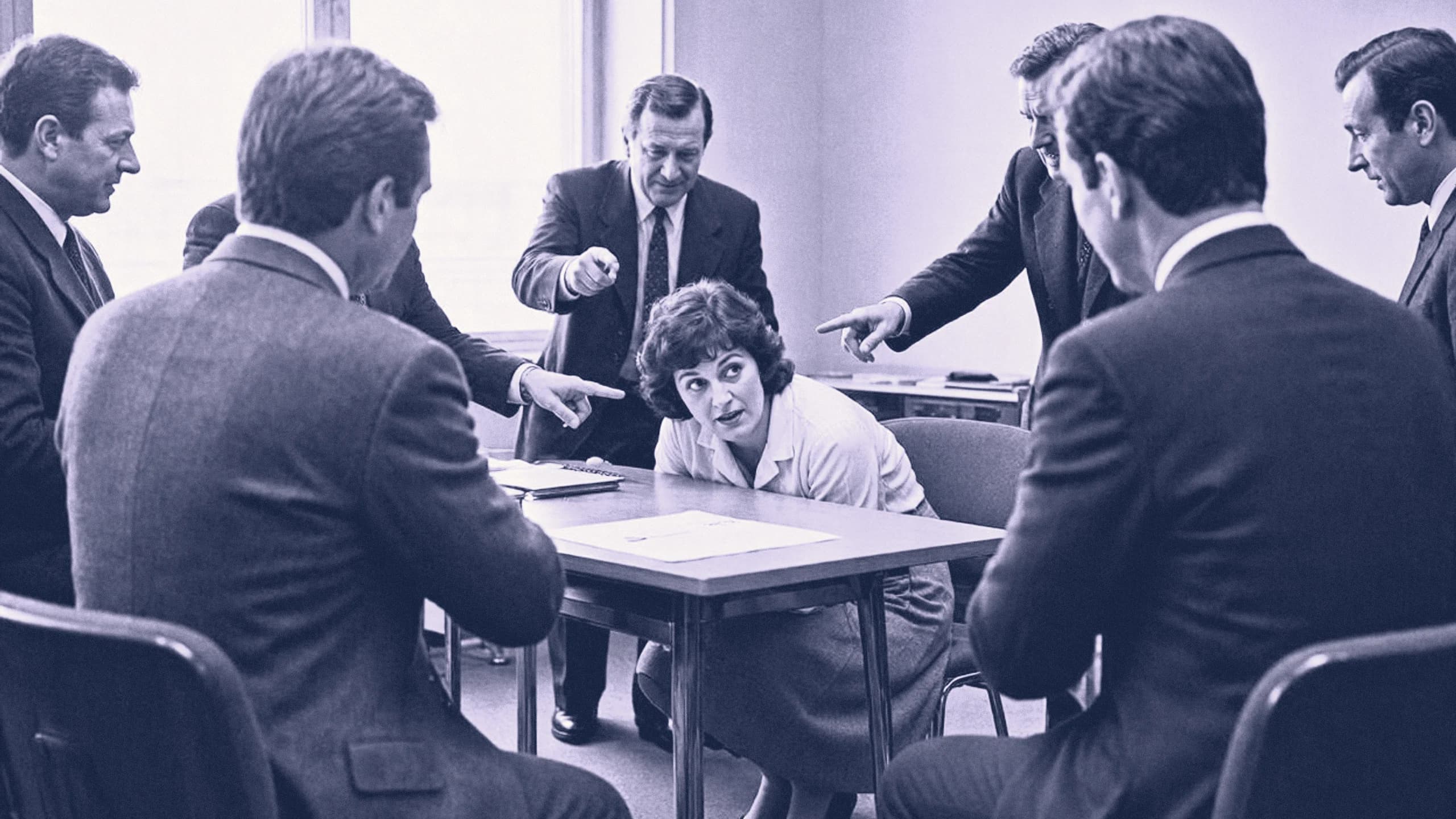
Many people promise themselves at New Year that they will stop stepping on the same rake over and over again — and, as a rule, they break that promise. Do you remember the viral video of a little boy taking on a shovel? He fights it with enviable persistence in every way he can, but inevitably loses. Let’s try to understand why we unconsciously “attract” this garden tool.
It all comes down to unprocessed traumatic experience that the psyche is trying to digest. Any experience can become traumatic if, for one reason or another, it exceeds the capacity of the psychic apparatus. For example, a long period of stress, or an event that is too intense or comes too early (a child’s psyche may not be able to cope with an adult situation, which is why childhood traumas are so dangerous and the most likely to be repeated).
Events in which a person finds themselves in a passive, helpless position are especially traumatic.
What happens to a person at the moment of trauma? As a rule, they “freeze” and forget what happened. From the outside, a traumatised person seems cold, detached and devoid of feeling — as if it had happened not to them but to someone else.
If you have watched “The Queen’s Gambit”, you will remember how emotionless its heroine, Beth Harmon, is. This coldness is a defence mechanism, a block on unbearable feelings: grief and, at the same time, anger at her mother, who died in a car crash. After all, it seems the woman was trying to kill both herself and her child. In the scenes before the crash the girl seems relatively normal, with livelier emotions.
Keeping up such a powerful defence comes at a high price: it uses a huge amount of psychic energy, and you can’t take in reality in all its fullness and variety of feeling. From childhood the heroine resorts to various forms of “anaesthesia” from the past — tranquillisers, and later drugs and alcohol.
Chess is a defensive structure too. In one of her first interviews Beth admits that she was drawn to the chessboard as a world where everything is clearly defined and understandable, where all the pieces move strictly by the rules — that is, a world she can control. Unlike the car crash she lived through, where nothing depended on her and she was utterly powerless. This gives us an example of a healthier psychological defence than “anaesthesia”: sublimation, when instead of destroying themselves a person channels their energy into an activity society approves of.
Meanwhile the repressed traumatic experience keeps trying to come back and play itself out in life again and again. And so Beth goes through the sudden death of her adoptive mother and falls back into self-destructive behaviour.
Sigmund Freud noticed the phenomenon of repetition compulsion a hundred years ago, while treating patients who had been through the First World War (in those days PTSD was called “war neurosis”). Freud, who until then had assumed that the psyche works by seeking pleasure and avoiding unpleasure, was deeply puzzled by the compulsive repetition of traumatic experience. You would agree it hardly looks like pleasure.
The clue came from Freud’s own grandson — or rather from watching his childhood game, which he later described in “Beyond the Pleasure Principle”. The boy was very attached to his mother, yet showed no outward reaction when she left him to go about her business. Instead he threw his toys under the bed and told them “Go away!”. In other words, with his toys the child reversed his role in the situation from passive to active, from defeat to victory: it wasn’t his mother who had left him — he had sent her away. And he did it many times in a row, until his sense of control over the situation took hold (just like Beth with her chess).
Then the boy made the game more complex. He threw a reel on a string behind the bed and pulled it back again. The game meant “Mummy’s gone — Mummy’s back”. And he repeated the traumatic part, “Mummy’s gone”, more often than the part where “Mummy’s back”.
All children do this. If we try, we can remember examples from our own childhood — how, after coming home from the clinic or from school, we played doctors or teachers with our younger brothers and sisters or with our toys.
So when an adult keeps stepping on the same rake, it is the equivalent of a child’s game. It is a well-learned way of coping with a difficult situation by replaying it many times.
So how can you break out of this cycle of repetition? How can you work through trauma?
One way is that next time you get lucky and manage to replay the situation differently, with a better outcome for yourself. As Freud said, life is the greatest teacher. You may meet someone who responds in a new way to a familiar situation. You can try interacting with people differently. This is what happens in “The Queen’s Gambit”. The heroine finds friends she can lean on, and at the climax of the series she sees the chessboard on the ceiling without the help of tranquillisers.
Another way is to go into psychotherapy or coaching. Most often traumatic experience remains unconscious, and a person may not notice the repetition straight away or understand its cause. A specialist can help you see the acting out, work out its meaning and find another way to cope. There are even therapies originally based on play, such as psychodrama: the client’s inner world is acted out, with the chance to see from the outside what is happening and to replay the story.
The “rake” is not only pain but also a chance to make all your lived experience your own, become whole and move on.
For example, one client came to coaching after yet another job loss because of a conflict with her manager. At her new job, communication with her boss wasn’t going well either. The client was able to see that she was weighing down her working relationships with a personal conflict with her mother. We worked on separating her mother from her manager in her psychic space and on her relationships with parental figures. As a result, this time she managed to keep her job. What’s more, her inner image of her mother became less “demonised”, and her relationship with her real mother warmed up too.
In another case a client came with problems in her relationships. She kept finding herself in love triangles and couldn’t choose — neither leave nor stay; both were equally agonising. It turned out that she was re-enacting the scene of her parents’ divorce, when they had “divided” her between them. Gradually the client regressed less often to the position of a child faced with an impossible choice, and she is now beginning to build relationships differently.
So repetition compulsion is a signal of a trauma we have lived through. With attention and working through, the “rake” can become an area of growth.