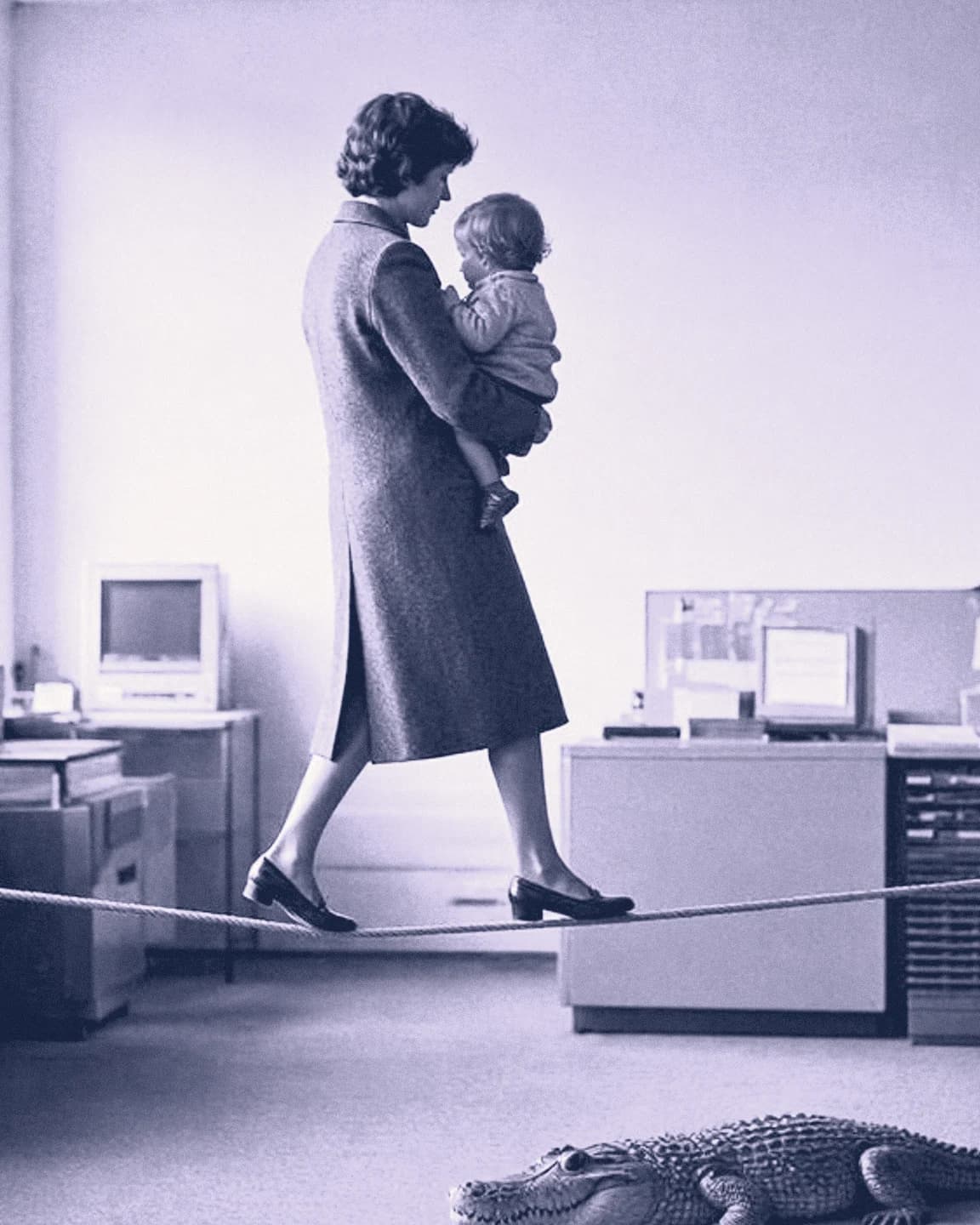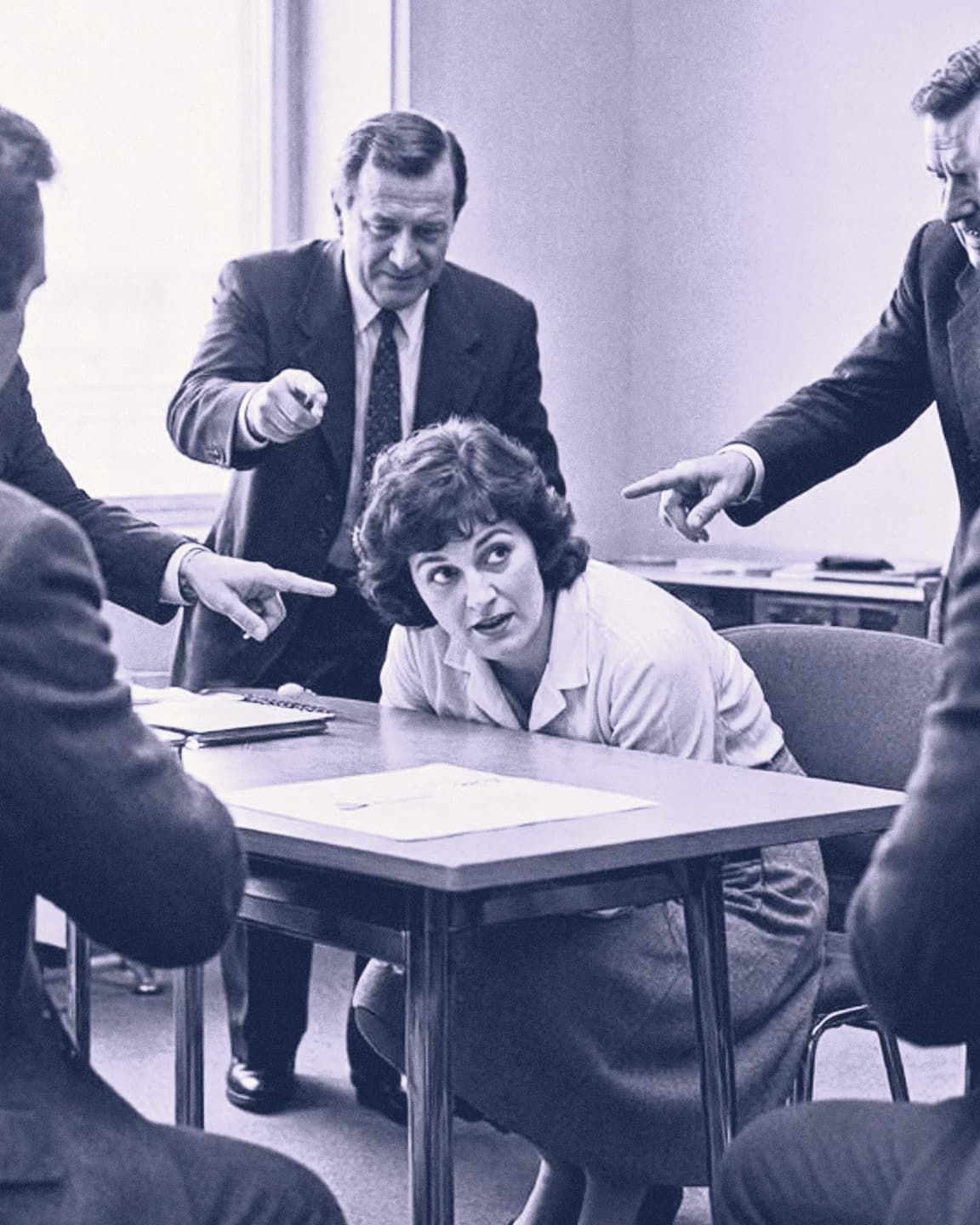

As a rule, this is linked to parental figures (you may not surpass your father and/or go against a domineering mother). Another cause can be a trauma passed down in a family from generation to generation — for example, the dispossession of peasant families in the Soviet era, forced resettlement or other repressions. The trauma persists because it is kept silent, whereas a trauma that has been worked through becomes a resource for getting through crises.
The case
Nikita, a charming 35-year-old, came to coaching with the question: should he go back to salaried work or carry on with his own projects?
Nikita had a good career in a corporation (he rose to head of department in a large holding company). Alongside it he launched several projects of his own and gradually left the company. The same thing happened with every one of his projects: as soon as the business began to make a real profit, he lost it. Nikita handed his businesses over to former partners or competitors “without a fight” and immediately started the next one, often in a field new to him. He took several degrees and mastered several professions so that he could do everything himself and personally cover the main areas — sales, finance, marketing and so on. He even studied psychology (“to understand myself”).
the client’s name and some details of the case have been changed for confidentiality
But for all Nikita’s tremendous potential and capacity for work, the story repeated itself again and again.
He came to coaching in a state of crisis after losing yet another project (otherwise, on principle, he wouldn’t have come). Disappointment made him think about going back to a corporation. At the same time he stubbornly refused to talk about his losses — in business or in his personal life (Nikita lost his father early). “Forgot it and moved on.”
Silence and the denial of loss are in fact a serious limitation: they keep you from doing the work of mourning, from letting go of the lost object and investing your energy in the future. So does the urge to do everything alone, which sooner or later becomes an obstacle to growth. Being a “one-man band”, emphatic self-sufficiency and an unwillingness to become attached to people speak of a fear of dependence and of sudden loss (as happened with Nikita’s father).
Despite Nikita’s sociability and positivity, throughout our sessions I couldn’t shake off a sense of total loneliness. The image of Atlas came to mind — holding up the heavens on his shoulders and about to shrug.
I also kept asking myself where my client’s fear that everything would be taken away came from — and, at the same time, his lack of resistance, his readiness to give away everything he had invested money and effort in. His urge to “keep his head down” and simply keep working hard.
It turned out that Nikita came from a family of victims of political repression. His father was the son of an “enemy of the people” (his grandfather had been denounced by his comrades). Then the puzzle fell into place. The unconscious belief that you must not resist — because you are up against a huge, all-powerful machine of repression. The unconscious belief that you must not be successful — or you’ll be noticed and everything will be taken away, and you’ll be jailed or even killed. And a distrust of colleagues and partners.
The situation was made worse by guilt towards his father. The thing is, for a short time after university Nikita had worked in law enforcement — for which he calls himself a “traitor”. Perhaps his failures in business became a form of self-punishment (unconsciously, of course).
In three sessions Nikita worked through the question he came with — he confirmed that working for someone else was not for him and… went off to build another business. He didn’t go deeper into the family trauma, the loss of his father and the unconscious ban on success. He decided “not to dig into the past”.
Why isn’t “forget it and move on” the most successful approach?
Repetition compulsion (in other words, stepping on the same rake again and again) usually points to trauma. Our psyche tries to process traumatic experience, and to do so it confronts us with it again and again — in the hope of resolving the traumatic situation this time and getting out of it differently. Unconsciously we look for these rakes and set them up ourselves. So Nikita finds the “right” people and the “right” project and repeats the same patterns that have already led to losing a business.
The positive-psychology advice to turn the page and live for today doesn’t always help. The thing is, there is no past tense in the psyche. The subjective past — the feelings and experiences we have lived through — is a moveable feast that is always with you. As are our fantasies about the future. Psychic time is non-linear: past, present and future are present in it at once. As in “Interstellar”.) So when a psychologist talks to you “about your mum and dad”, they are not talking about the objective past. They are talking about the past that goes on living in your present and periodically “surfaces”.
How does the transgenerational transmission of trauma work?
Transgenerational trauma began to receive serious attention in the 1960s, when psychologists found symptoms of real trauma in the children of Holocaust victims, as if they had lived through those events themselves. Empirical studies and extensive clinical material showed that extreme trauma (from wars, genocides, political repression, slavery and so on) can be passed from parents to children — and over more than two generations.
The transmission of trauma is not esoterics but identification. Identification is an unconscious process in which a child identifies with significant people (first of all their parents), copies their behaviour and takes on their traits. It is the earliest and most basic form of emotional bond. In wanting to become “like Dad” or “like Mum”, a child may also repeat their traumatic symptoms.
This is normal — evolutionarily, this is how we learn and pass on experience useful for our offspring’s survival. In “Totem and Taboo” Freud wrote that the progress and development of humanity would be impossible without the transmission of mental processes from generation to generation; otherwise each generation would have to learn life anew.
Different generations (the “survivors”, the “children of survivors”, the third generation and beyond) experience trauma differently.
Speaking of the “children of survivors”, researchers draw attention to the family secret, the mystery, the silence. “Surviving” parents often don’t talk about what happened to them, but their children still pick up the non-verbal information (gestures, reactions and so on). The child becomes a kind of carrier of the secret — knowledge they are forbidden to have, but which tacitly “shows through”.
The third generation receives only vague sensations, emotions and images that seem strange and inexplicable both from personal experience and from family history. The affect is there, but its source isn’t obvious. The house stands, the lights are on, but sadness has come from somewhere. Research shows that, because of this not-knowing, the third generation has even more psychological problems than the second.
So what is frightening is not only the trauma itself but also the silence around it. In Nikita’s case he knows about the family trauma, yet he goes on keeping this “conspiracy of silence”.
The good news is that trauma can become a resource. If a person has managed to symbolise their trauma, their children receive not only the traumatic experience itself but also the mechanisms for processing it psychologically.
Research into the descendants of victims of Stalin’s repressions, carried out in the early 1990s by Yulia Gippenreiter at Moscow State University, showed that a trauma worked through in the past helps people cope with crises in the present (the events of Perestroika were taken into account) and keep their identity in them. A link was found between the memory of repressed
relatives and the level of psychological functioning of their descendants. Higher functioning was seen in people who had tried to find information about their ancestors and connect with their family history. In families where the trauma was kept silent and the facts of repression hidden, there was a lower level of psychological functioning overall and more primitive ways of managing anxiety in particular.
An unexamined past – is a big problem in Russia and across the former Soviet Union. “Memory politics” and “memory wars” have become part of our everyday reality.
It is notable that in the last few years there has nonetheless been a growth in reflection. And those initiating it are people of the third generation of trauma (remember Yuri Dud’s documentary “Kolyma — Birthplace of Our Fear”) — people like Nikita and other young entrepreneurs.